
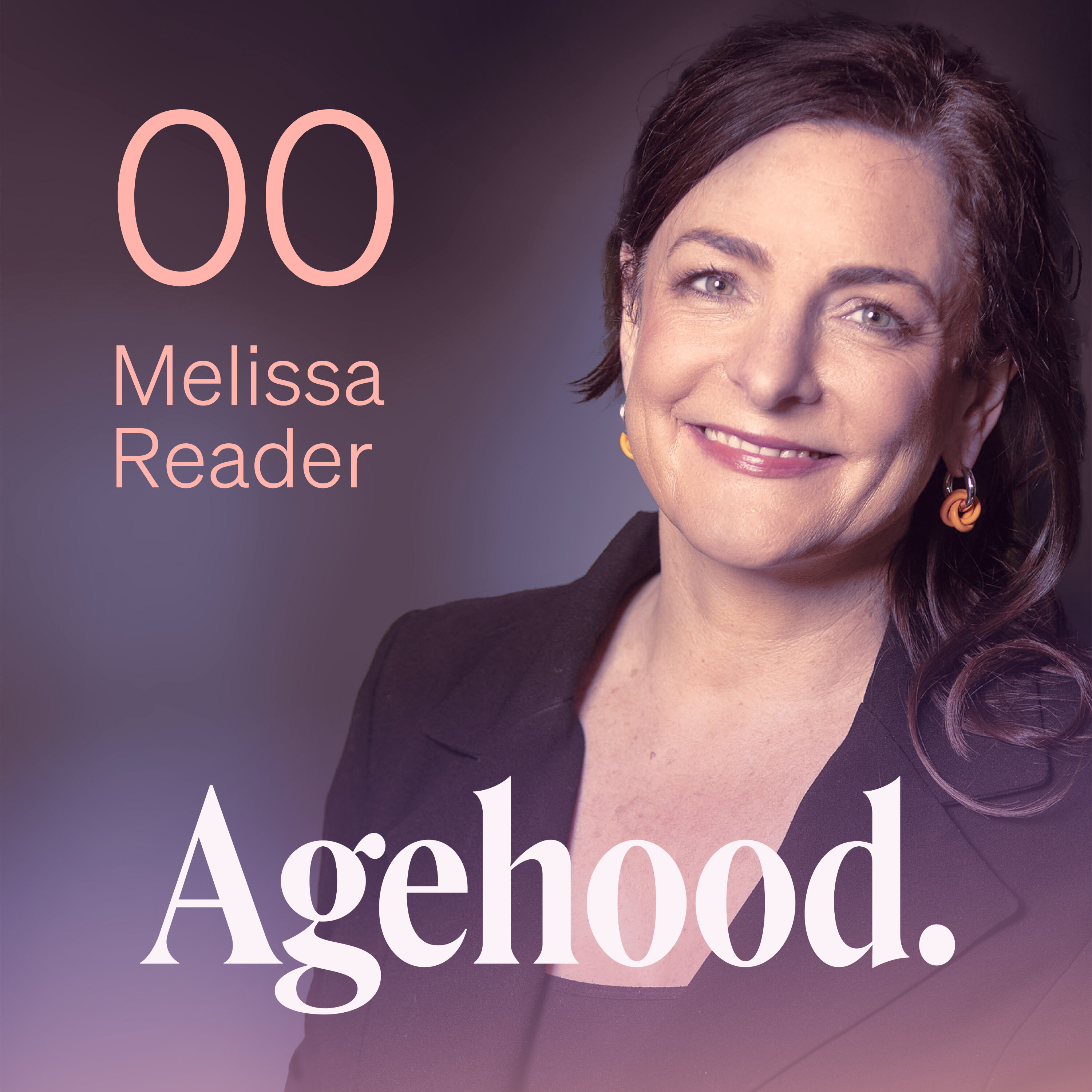
Agehood is here. Let’s talk about what comes next.
Welcome to Agehood. The podcast where we have the conversations that matter most but happen least often.
Over the next 12 weeks, host Melissa Reader will sit down with some of Australia’s most trusted voices — from beloved broadcasters to leading experts — to talk about caregiving, aging, grief, and the invisible load carried by the sandwich generation.
But before we get to their stories, we wanted to begin with Melissa’s.
In this opening episode, Melissa shares why she started Agehood, the personal story that led her to found Violet, and why it’s time we stop avoiding the last chapter of life — and start preparing for it.
FIND OUT MORE
If Melissa’s story struck a chord—you’re not alone. At Violet, we offer free tools and support to help families navigate the last stage of life with care and confidence. Visit violet.org.au to start the conversation.
CREDITS
Host: Melissa Reader
Executive Producer: Lize Ratliff
Find out more about Violet at violet.org.au
Agehood is the podcast that finally says what we're all thinking but rarely saying out loud. Hosted by Melissa Reader, CEO of Violet, we have the conversations that matter most: watching our parents age, being everyone's go-to person, the mess of love and duty, what it really takes to care for those we love, and yes, death, dying, and loss.
You'll hear Australia's most trusted voices, from beloved broadcasters to respected experts, vulnerably sharing their own stories alongside practical guidance that actually helps. This isn't about having all the answers—it's about asking the right questions and knowing you're not alone.
See omnystudio.com/listener for privacy information.
Transcript
Foreign. I'm Melissa Rieda, CEO of Violet and host of Agehood. Welcome. Agehood is a podcast for midlifers who are quietly carrying it all. Aging parents, adult kids, our work, our relationship, our finances, and our own next chapter. If it sounds a little like you, well, you're in your age hood and it's time we talked about it. In today's episode, I just wanted to take a few minutes to introduce myself and really to tell you all a little bit more about why I thought this podcast might be important. It's a little bit of the backstory. Why? You know, I think it's really critical that we start to cut through some of the silence around the last chapters of someone's life, around death, dying, grief and loss, and to get a little bit more honest with what it really takes to care for the people we love. It really came to me through a chapter of my life which was incredibly tough, not just for me, but for my husband and my three little kids. I was running a business with my husband, you know, right in the peak years of life, where you've got toddlers and nappies and schools and business and mortgages and all the kind of chaos of those early couple of years of a marriage. And my beautiful husband, Mauro, just had not been himself for quite a while. And then I thought he was starting to, like, put on weight. His belly just looked weird to me. You know, just something in my brain was saying, that doesn't look quite right. Took me quite a few months to get him off to the doctor, as it does, right? Getting our husbands to go and get have a conversation with the gp. But when he got there, there was some pretty serious stuff going on for him. He went straight into a series of ultrasounds and tests and they discovered that he had a tumor on his kidney, which on its own is quite small actually and, you know, may have been managed, but sadly, it had already metastasized. It was in four or five major organs across his body. It had spread pretty rapidly and it was going to be terminal. That just threw our lives into total chaos for all of the obvious reasons. Over the next 15 months, I think all of us, me and my kids and our family, we watched that cancer slowly take this gentle, creative, curly haired, you know, amazing man away. In the last couple of months of Mara's life, he just spent weeks and weeks and weeks in hospital away from us. Probably quite lonely, you know, in a pretty sterile hospital ward having treatments that he really might not have chosen to have if we had been able to Talk about what was happening and really recognize the seriousness of his disease. You know, I think we probably would have made decisions differently, and we would have made sure that he spent more of those last few months at home with us, with his kids, being loved, being hugged, and making beautiful memories together. That is not how it played out when he died. It was a really clinical, really impersonal, really frightening experience for all of us, him included. And we were totally, totally unprepared. And I then found myself as a, you know, widowed mother with three little kids. The youngest had just turned two. My son was four and my daughter was seven. And I was a single parent, suddenly, to these gorgeous little humans. And it was going to be my job to help them make sense of what had happened, try and find our way forward, but alongside that, you know, keep running the business that we own together. That was our sole source of income. My. My God, it was a hard period of life. I really felt like I was crumbling inside. And amidst all of the sadness and grief, parts of me felt actually pretty angry and pretty abandoned because I really couldn't believe that we hadn't talked about how this might play out. We hadn't talked about how I was going to cope raising these beautiful humans and trying to take us forward. We had no plan in place. Maro hadn't even written a will. We were unprepared, practically, emotionally and spiritually, I guess, for that whole period of our lives. And my goodness, what followed, pure haze of Greece mixed with something that I didn't realize at first, but, you know, it really crept up on me, just this heavy, heavy weight of regret. Regret for the conversations we hadn't had, regret for the hugs that he so desperately needed that he missed out on, regret that we'd avoided, you know, the reality of what was happening. And a really deep regret that Mara spent so much of his precious, precious time in a hospital environment having treatments that pretty low value to him in the. In the health condition he was in. It wouldn't have been where he wanted to be, and it should have played out differently. So as anyone knows who's been through the loss of a loved one, it's a pretty shaky couple of years. Somehow I kind of got back on my feet and really started to think about how that experience had changed me as a person and how I wanted that experience to really channel the course of my work and the course of my life. A couple of years after Mara's death, when I, I think, started to kind of return to some semblance of self and of, of normality. I was introduced to a very small charity that was doing some great work at a very local level to help families with this stage of life. With an incredible group of people, we really pushed forward to scale that organization into a national, not for profit, which would then become known as Violet. And our mission is really clear. It's helping all of us have these important conversations and create a meaningful plan. Not so that we can pretend that this is ever going to be easy, but my goodness, it can be better. We really want to help make sure that this stage of life is the best it can be for everyone involved. The misalignment between what we want and the experience we have in the last stages of life, it's, it's pretty profound. Most of us want care at home. Most people die in hospital. Hospitals are the least appropriate place for people to die. It's also very, very expensive for people to die in hospital. What we see over the course of the last 12 months of a person's life is a lot of preventable hospital admissions and a lot of low value care. And I really feel this part personally because it was such a big part of Maro's experience, because we didn't talk about it, because we weren't honest about it. So typically people are spending about 33 days in hospital in the last 12 months over about four admissions. So I'm not here to wave a magic wand and say everybody should die at home. That's not the objective. But how do we get real and honest with each other about what's most important to people? Where do they want to receive their care? How do we help make that more possible so that people have a better experience? And frankly, we reduce some of that preventable hospitalisation and low value care that doesn't serve anyone well. We can have an experience that is much closer to what we want and hope for and what we deserve. And that's really why this podcast exists. Agehood is here to open conversations around the stage of life that nobody warned us about, nobody talked to us about as sandwich jenners. You know, midlifers, this middle part of our lives, when we are still raising our kids, they might be in their late teens, they might be in their early 20s, but they still need us. They need us in a different way, and my goodness, they don't need us less suddenly because our parents need us more. Agehood is here for the midlifers of the sandwich generation, the ones who are finding themselves really squished and juggling all of those competing care priorities. If it sounds like you right now. Well, I'm really glad you found us. And this podcast, it is for you. Each week you'll hear real stories from people who are living this complex chapter. Right now. We're going to talk about the real stuff around the care, around the grief, the resilience, the. The identity, ageing, death, loss, and how to keep moving forward, even at those times where pretty much everything feels uncertain. This isn't a life stage that can be easy. There's loss involved, but we owe it to ourselves, and we owe it to each other to make sure that it's better. If I'd have known back then what I know now, you know, I think that Burrow's final months would have looked very different. I think he would have had so much more love and comfort and meaning. I think I would be sitting with a little less regret for how that played out. And I think my children would have more memories of their father in that really difficult time than the ones I suspect they're missing today. I can't change what happened, but I can share what I've learned, and I can hold space for others as they go through the same thing. So welcome to agehood. Let's talk about the things we were never taught to talk about. Let's help each other feel a little less alone in this stage of life, and let's do what we can to make this better for ourselves and for the people that we love. Sa.