
What is the Sandwich Generation?
If you're caring for ageing parents while raising kids and holding down a job, you're in it. Here's who the sandwich generation are, why the squeeze is getting tighter, and what actually helps.
The sandwich generation is the group of adults, most often in their 40s and 50s, who are simultaneously caring for ageing parents and raising their own children, usually while working. They are pressed between the needs of the generation above and the generation below, like the filling in a sandwich. Whether you call yourself a carer or a caregiver, if you're booking your mum's specialist appointments between school pickups and meetings, you're a member.
"Everybody pretends they're not going to join. Nobody thinks their parents are going to get older. No one thinks they're going to get older themselves. And gee, guess what? It happens."

That's part of what makes joining so disorienting: membership tends to arrive without warning, through a fall, a diagnosis, or the death of a parent's partner.
"Ageing happens slowly and then it happens suddenly, to us as Gen X's but also to our parents. There might be a fall or there might be some kind of diagnosis or there might be the death of their partner. That can change things significantly."
Why the squeeze is getting tighter
This isn't a niche experience, and the demographics say it's about to get much bigger. 2026 is an inflection point: the year the first baby boomers turn 80 and the first Gen Xers turn 60. The boomer generation, born from 1946, starts crossing the 85-year threshold in the early 2030s.
Bernard Salt calls what follows the care cliff. For fifty years, Australia's 85-plus population grew by roughly 10,000 to 15,000 people a year. Over the coming years that annual growth jumps to around 62,000, about a five-fold increase. He projects that by 2032, aged and disabled care will be the single largest occupation in the country. The same wave, driven by the same post-war birth cohort, is breaking over the United States and the United Kingdom on almost the same schedule. The full, sourced numbers behind all of this are collected on our sandwich generation statistics page.
And the census is blunt about who absorbs the pressure at home.
"It is 58 year old women who do most of the care."

People are living longer, families are having children later, and the window between active parenting and parent-care has collapsed. Two full-time caring roles that previous generations experienced in sequence now arrive at once.
What it actually feels like
The defining sensation isn't any single task. It's the pull: being needed in three directions at once and feeling like nothing gets your full attention.
"Whenever we're pulled in so many directions, we're never doing anything right, nothing is good enough. So we're feeling guilty about letting everybody down... it just is a continual state of guilt. It's so debilitating."
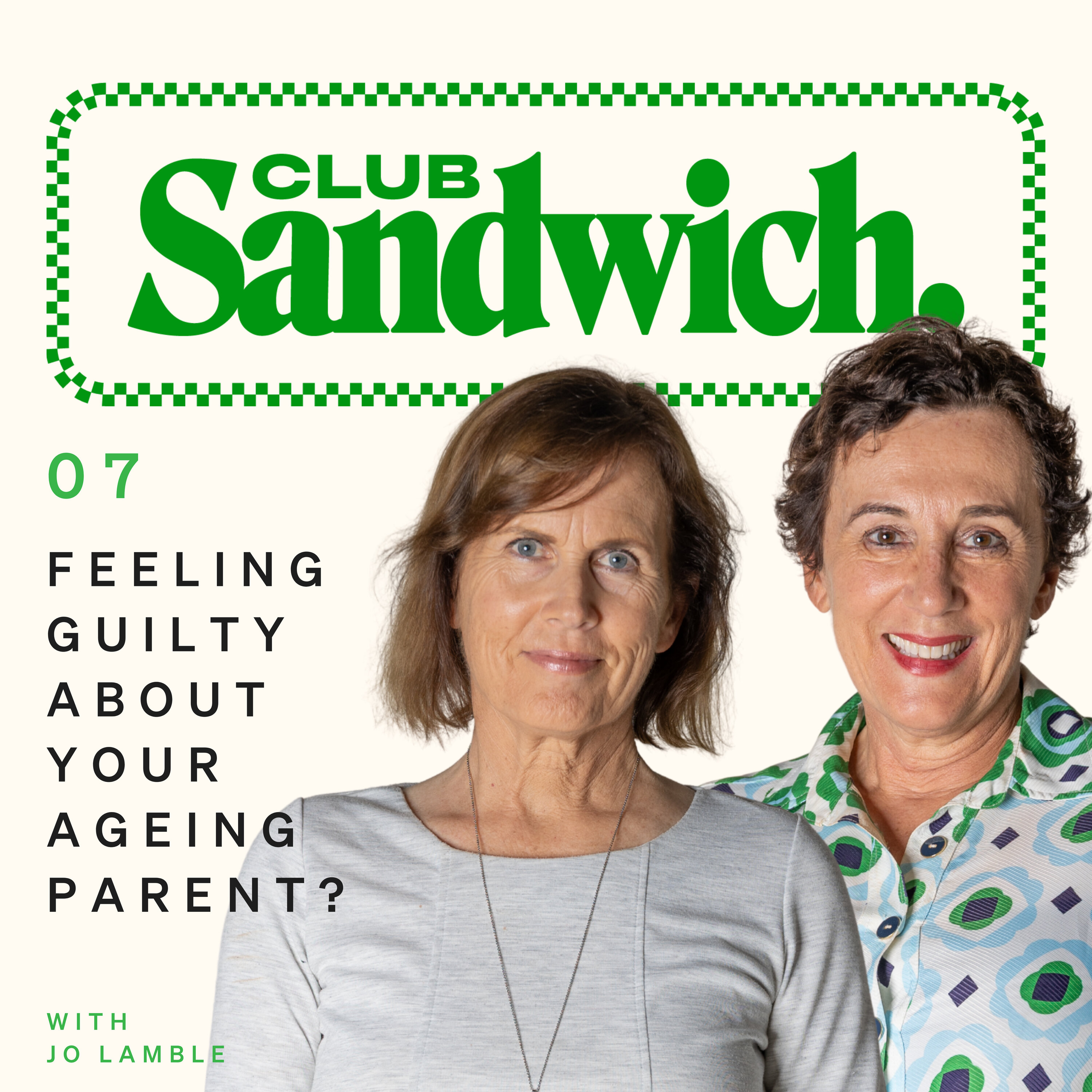
The other constant is guilt: guilt about the kids when you're with your parents, guilt about your parents when you're at work, guilt about never getting to yourself. If that's you, the reframe that recurs across our conversations is worth holding onto.
"You're turning up, you're worrying, you're asking the questions. You're doing an awesome job. Not a perfect one. Nobody does a perfect one. You're doing an awesome one."

The double squeeze: young kids and old parents
A growing number of sandwich carers had children later, which means toddlers and school runs colliding with hospital visits and aged care decisions. Parenting educator Maggie Dent's advice: don't try to hide the older generation's decline from your kids, include them in it, and be honest with them, even about death.
"I want our kids to know that sometimes bodies stop working and that's what's called death. Not they passed over or God came and got them or they went asleep."
She's equally direct about the cost of always coming last in your own house.
"You can't pour from an empty cup. Watch out for the burnt chop syndrome. Your job is to put everyone, including the dog, quite often ahead of yourself. We've got to stop that because it's modeling a lack of worth of our own selves."
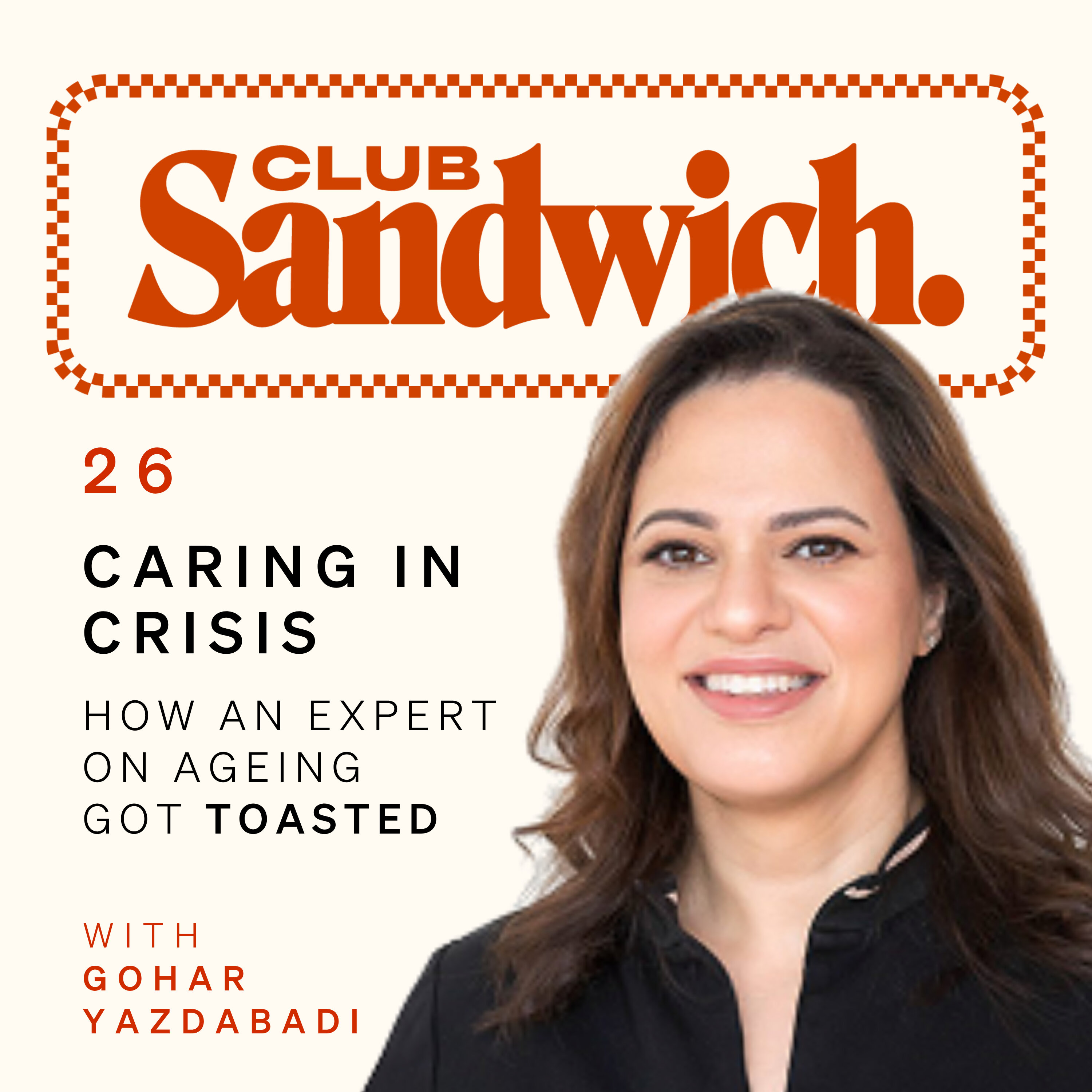
For some families the squeeze goes further still. When COTA NSW chief executive Gohar Yazdabadi's parents' health collapsed within months of each other, she was juggling two young daughters and a demanding job of her own, and the maths of caring in her house flipped almost overnight.
"So it turned into a very multi generational household and a very full household very quickly. So I kind of feel the care ratio was 1 to 4. Slowly getting into that, into that sort of land of me being the primary carer for four people in the one house."
What actually helps
Across dozens of conversations with geriatricians, psychologists, demographers and people living this, the practical advice converges on a short list:
- Have the conversations early. Ask your parents what they want while it's still a chat over a cuppa, not a crisis in a hospital corridor. Fewer than 14% of Australians have a meaningful plan in place for this stage of life; the families who do carry far less low-value trauma at the end. Our guide to the questions to ask your ageing parents gives you the openers.
- Get into the system before you need it. Assessments, paperwork and support services everywhere have waiting lists. Doing the registration early means decisions don't get made in crisis mode. In Australia, that starts with My Aged Care; our Australian guide walks through it.
- Trust what you're noticing. The decline is usually visible in small things long before it becomes a crisis. Our guide to the signs your parent needs help covers what to look for, and what to do when they insist they're fine.
- Share the load deliberately. The care defaults to one person, usually a daughter, unless the family explicitly decides otherwise. See how to get your siblings to help, and if the most intimate work has landed on you, our guide to showering an elderly parent covers how families actually do it.
- Don't look away from the end. The families who cope best are the ones who can talk about death before it arrives, and who know that grieving someone who is still here is a normal part of this stage, not a betrayal of it.
- Know grief doesn't stop at the funeral. If your parent has already died, our guide to losing a parent covers the identity shift, the guilt, and the grief that keeps arriving long after everyone else assumes you're fine.
- Keep one thing for yourself. Not bubble baths and candles: one real, non-negotiable thing a week that's yours. Caregiver burnout is an occupational hazard, not a personal failing.
"We are going to ask you every week, what have you done for yourself this week? Because you have to do something for yourself just once a week."
Should you quit your job to care for your parent?
Sooner or later most sandwich carers ask it, usually late at night after a week when work, kids and parents all needed them at once: should I just quit? Sometimes the honest answer is yes, for a while. But for most people quitting is a cliff, not a relief. The income stops at exactly the moment care starts costing money, the retirement savings stop building in the decade when they compound hardest, and re-entering the workforce in your 50s is far harder than leaving it. Caring roles also rarely run to schedule: what looks like one hard year can become five. A decision that big deserves better than your worst week.
Before you resign, have the conversation with your employer, because most people never do. Depending on where you live you may be entitled to carer's leave, and many workplaces have flexibility policies that nobody has ever tested against looking after a parent, because nobody says the words out loud. "I'm caring for my ageing mum" is a sentence managers are going to hear a lot more of; the demographics guarantee it. Ask about flexible hours, remote days around appointments, or a temporary drop in responsibility. A caregiver who names the situation can be accommodated. One who stays silent just slowly disappears.
There's also a case for keeping your job that has nothing to do with money. For many carers, work is the one place they are not a carer: structure, adult conversation, and the version of you that existed before the caring did. The medical argument points the same way.
"Routines are so good for you. I mean, that's why I advocate staying in work as long as possible... it keeps you in a circadian routine. The worst thing you could do is go and retire to Queensland and sit on a beach all day."
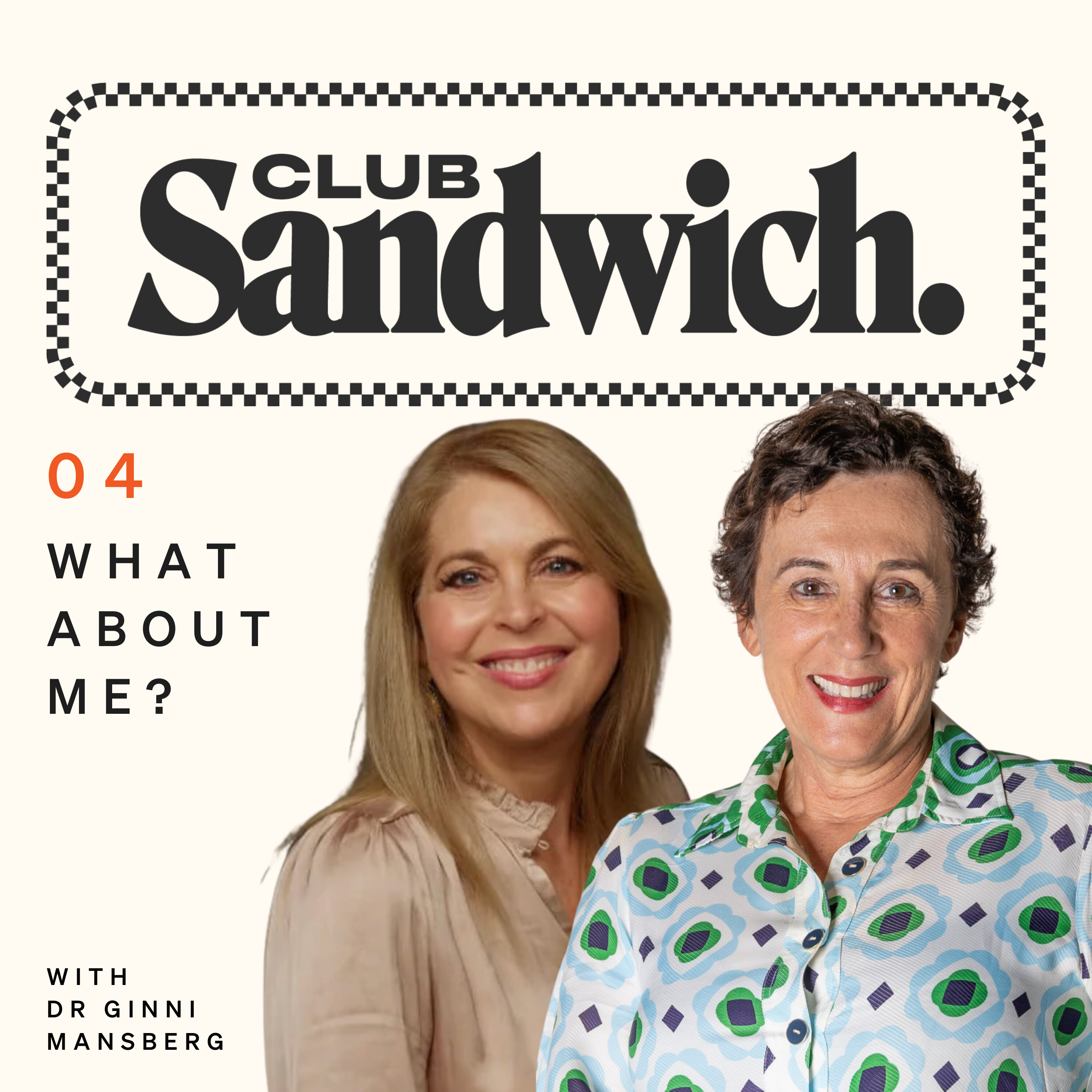
If the juggle really is unsustainable, reducing your hours usually beats quitting: dropping a day keeps your income, your retirement contributions and your foot in the door, while freeing real time. And before you shrink your career, check that the load is actually shared, because care defaults to whoever is already doing it; our guide to getting your siblings to help is where to start. If you're running on fumes whichever way you decide, read our guide to caregiver burnout first.
Frequently asked questions
What is the sandwich generation?
The sandwich generation is the group of adults, typically in their 40s and 50s, who are caring for ageing parents at the same time as raising their own children and usually holding down a job. They are "sandwiched" between the needs of the generation above and the generation below.
Why is it called the sandwich generation?
Because people in this stage of life are pressed between two layers of family responsibility, like the filling in a sandwich: parents who increasingly need support on one side, and children who still depend on them on the other.
What is the club sandwich generation?
The club sandwich generation is a newer term for people squeezed by more than two layers, for example supporting elderly parents, adult or young children, and grandchildren at the same time. Demographer Bernard Salt describes today's version as effectively Generation X: people in their 50s with 80-something parents and 20-something kids.
How common is the sandwich generation?
Very, and growing fast. In Australia alone the experience affects around five million people, and the population aged 85 and over is about to grow at roughly five times its historical rate as the baby boomers born from 1946 cross that threshold in the early 2030s. Similar demographic waves are underway in the US and UK.
How do you survive the sandwich generation years?
The consistent advice from experts across our episodes: have the hard conversations with your parents early, before a crisis; get assessments and paperwork sorted before you need them; accept that guilt is a sign you care, not that you are failing; and protect one small thing for yourself every week. And find people who get it, because isolation makes all of it worse.
You've got them. We've got you.
Club Sandwich is the podcast for the sandwich generation: honest, expert-led and allergic to platitudes. Start anywhere.