
Stuck between kids and aging parents: Sarah MacDonald on life in the middle
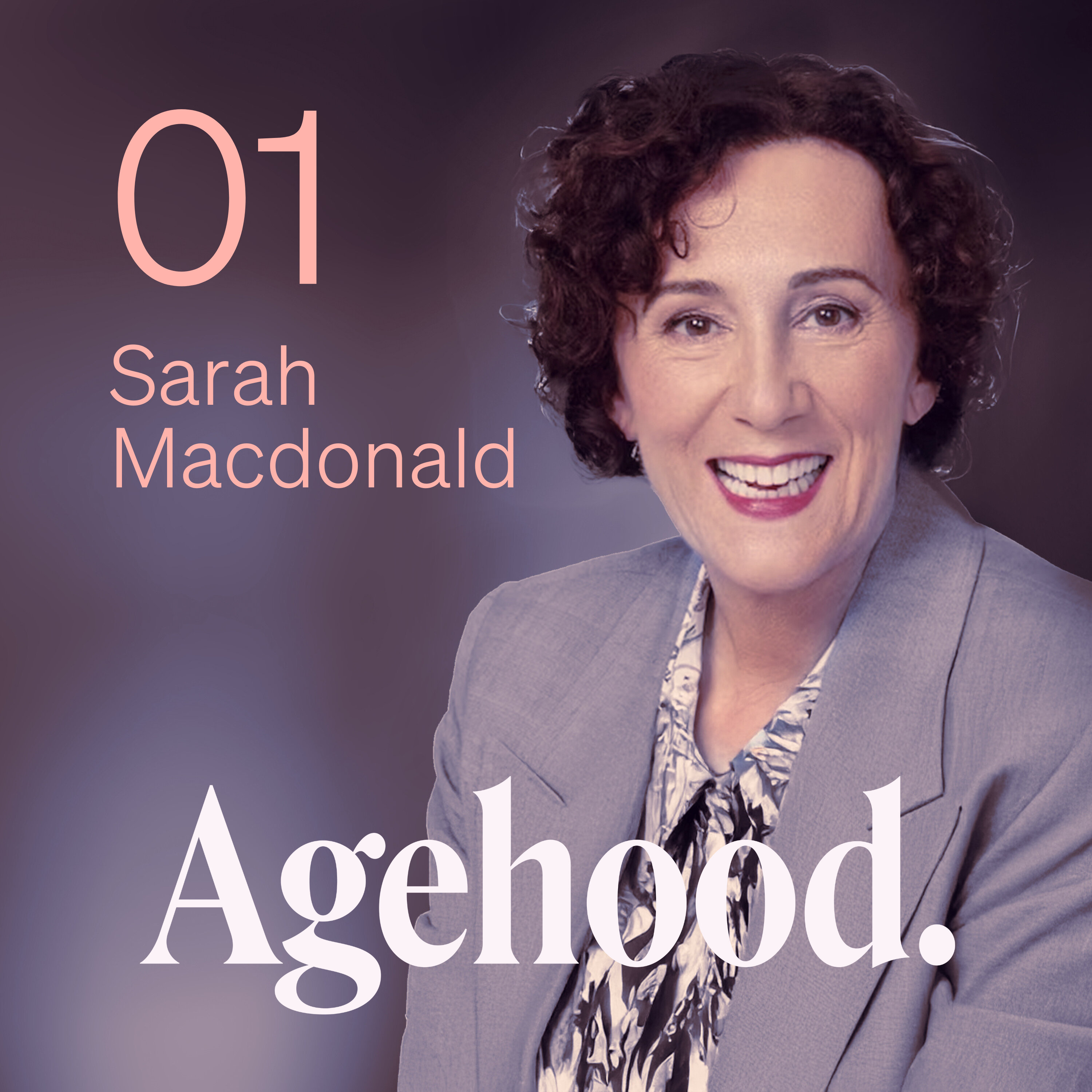
Journalist, author and broadcaster Sarah MacDonald has spent a lifetime telling other people’s stories — but in this episode of Agehood, she shares her own.
Sarah opens up about losing her beloved father, a gentle obstetrician who championed women through birth but didn’t get the gentle death he deserved. She reflects on what it meant to become his advocate in a hospital system that wasn’t prepared to let go, and the lasting impact of that experience.
Now in the thick of the sandwich generation — caring for both her mother and mother-in-law in their 90s with her young adult children living at home — Sarah speaks honestly about what life in the middle looks like.
FIND OUT MORE
If Sarah’s story resonated with you—and you’re caring for aging parents, navigating your own next chapter, or just trying to keep all the balls in the air—you’re not alone. At Violet, we offer free tools and support to help families navigate the last stage of life with care and confidence. Visit violet.org.au to start the conversation.
CREDITS
Host: Melissa Reader
Executive Producer: Lize Ratliff
Find out more about Violet at violet.org.au
Agehood is the podcast that finally says what we're all thinking but rarely saying out loud. Hosted by Melissa Reader, CEO of Violet, we have the conversations that matter most: watching our parents age, being everyone's go-to person, the mess of love and duty, what it really takes to care for those we love, and yes, death, dying, and loss.
You'll hear Australia's most trusted voices, from beloved broadcasters to respected experts, vulnerably sharing their own stories alongside practical guidance that actually helps. This isn't about having all the answers—it's about asking the right questions and knowing you're not alone.
See omnystudio.com/listener for privacy information.
Transcript
Welcome to Agehood, the podcast for people who are quietly carrying it all. Aging parents, adult kids, careers and their own next chapter. If this sounds like you, well, you are in your age hood and it's time we talked about it. My name is Melissa Reeder. I'm the CEO, CEO of Violet and I'm the host of Agehood. If you're anything like me, hearing from today's guest, it's gonna take you back to a time in your life when you know, you might listen to Triple J and frankly, terms like sandwich generation, they were not on your radar. Sarah McDonald, better known to most of us as Sarah Mack, is a journalist, an author and a broadcaster. And she is an all round brilliant woman. Chances are you've heard Sarah's voice on the abc, you've read her words in the Sydney Morning Herald, or maybe you've picked up a copy of her book. Holy cow. Today, Sarah is sharing an intimate story about her dad, a devoted obstetrician who brought countless new lives into the world whose final months were marked by Parkinson's, by hospital battles and the need for Sarah to advocate really fiercely for the gentle death that he deserved. And this loss, while deeply painful, it has really helped shape Sarah's perspective on caring, on regret, and on unfinished business. And many of us carry that right now. As she's supporting both her mother and her mother in law in their 90s, she's also raising young adults of her own. And Sarah's got some really candid views about juggling care, career guilt, resilience, and what really happens when caring for parents becomes part of your journey. With her, always on humor and honesty, she explores what midlife really feels like and how she's starting to find her way again. If you've ever felt caught or squeezed between generations, or you've wondered how to balance giving, grieving and living, today's conversation with Sarah Mack is for you. Sadmin is the unexpected burden of endless bureaucracy during times of deep grief. Wills are important, but they don't give critical information like passwords, bank accounts and bills. For that, you need a letter of wishes from today's sponsor, BillWill. Go to BillWhill.com for a simple and secure way to reduce stress for your loved ones, share your values and preserve your voice. Sarah, so much of the conversations on Age Hood anchor around this idea of the sandwich generation. And you know you have had that experience in two very different ways in your life. From what I understand, with your dad's death quite a few years ago, when your kids were a Lot younger. And I understand your mum and your mother in law are now quite elderly. I really am so interested to hear your perspective on both of those issues. But could we start talking a little bit about your dad? What a wonderful man.
Thank you. My dad was the most beautiful, exceptional man. And I'm sure a lot of daughters say that about their daddy. And, you know, every dad's special if he's a good dad. And my dad was a wonderful dad. But he wasn't just a dad to me in a way, because he was an obstetrician and he helped a lot of women bring babies into this world. And when I was a teenager, I thought this was disgusting. I thought it was the most disgusting job. And I said to him, oh, dad, how can you do such an awful job? You know, doing that all day looking at women's vaginas while they're having babies? And he said to me, I am there every day at the most extraordinary moment of new life entering the world. And. And it is the greatest moment in a person's life or a couple's life. And it never, ever gets old. It's always beautiful. And I'm always just astounded at the power of women. And I went, oh, okay. That shut me up. I think it was probably the only time he shut me up as a teenager. So he wasn't away a lot, but he worked a lot. So he would go out and deliver babies in the middle of the night. He didn't do a lot of inducing. He was one of the first people in Australia to use natural birth methods. That's called Lamar's, where women, before that, women were shaved and put in stirrups and all that sort of stuff. And in the 70s, he had a patient who said, no, I want to have the lights down, put the baby on my chest. And he was like, okay, that makes sense. So he worked a lot. Every Christmas day, he would take a phone call and we'd say, here comes baby Jesus. And off he'd go. And, you know, and I think. I don't know if that helped bring on his Parkinson's earlier, but he had Parkinson's, so he didn't get long after he retired before he started showing symptoms. And so he died. He did make it to 80, but it was a particularly fraught time in all of our lives because we just adored him so much. And it was just. I just felt it was so unfair that he worked so hard for so many people for so long and didn't get to really enjoy retirement for that Long.
And tell me a little bit about those years where your dad was unwell because your kids would have been quite young. You would have been in the middle of your career, I imagine. How did you keep that all together and manage?
Well, I freelanced a lot of my career and because I had so many caring duties, you know, we had a lot of stuff going on with one of my children when he was young and I just couldn't work full time and I'd done a bit of writing as well and it was in the days when writing made a bit of money. So I'd done quite well on Holy Cow. So I did great. Old now as old as my children. It came out with the first childbirth basically a month before. But I. So I'd kind of been freelancing and so I was lucky that I could do that kind of work really. And then I'd go in and out of full time work with my parents. But because, I mean I'm one of four children but because I was the one doing that sort of work and I was the one in Sydney, I did a lot of the. And still do a lot of the caring for the parents because of that. So it has, I think, impacted on my career. There's no way you could say otherwise. And I do just find it so hard to do everything and do everything well. And I'm not a perfectionist. I am not one of those women who's a perfectionist by any means. But it does, it just pulls you. It's the stress of being pulled in so many different directions at once. Feeling like you're not doing anything properly or if you're trying to do stuff well, just feeling that tense stretch of your days and there's not enough hours in them. Yeah.
And there's just not anything left over, is there? At the end of those days, I think you, you'd never feel like you're doing quite a good enough job and there's never much left in the tank.
Yeah.
Much else.
And then, and then there's, you know, you kind of get at. By the end of the day you make it. I've, I've, I've realized, you know, you kind of resort to a glass of wine or chocolate and so you're not looking after yourself. And there's been a lot of times that I haven't done that as well. And you know, like my dad didn't. Do we learn the lessons. Yeah. You know, do we learn the lessons? I, I kind of have always found I'm not going to be like my dad, I'm not going to work that hard, but I have worked really hard. And so I'm. It's something really. I'm thinking about a lot at the moment about how we balance everything. Because while they always say, put the oxygen mask on yourself first, it's just like, yeah, but oxygen's the minimal. Of course we do that, but then we don't do everything else. We don't look after ourselves around that. And it's really hard to.
I've read a little bit about your dad and how he was very much an early advocate for gentle, gentle births, you know, and that was certainly something I was really interested in when I was having my kids. And I wonder, what was your experience of the last months, weeks, days of his life, given that he was such an advocate for kind of a gentle, supported entry into the world? Did he get a gentle, supported experience at the end of his life?
Not in the way that I think he deserved. Yeah. He was one of the first people to use what was the. Lamar's method, where you put the baby on the chest, you turn the lights down low, not doing the stirrups and the stitches and all that sort of stuff. I think towards the end, he was a very much an advocate of. He didn't want to go to hospital in the end, and he'd had a fall and he'd had a bleed on his brain because he'd had the Parkinson's, he'd had the fall, and he didn't like going to doctors, he didn't like going to hospitals. Classic doctor. Right. But I think he knew too much as well, and he knew what happened in hospitals towards the end. And while I can't fault the hospital, the hospital does what a hospital is meant to do, but they don't, you know, they don't want to let go. And there was a bit of a comedy of errors. His doctor was this lovely Parkinson's doctor, but he went to overseas to be with Michael J. Fox, actually at a conference he was doing. So he wasn't there when dad wasn't responding to the operation. So there was a lot of things that happened, and I had to really be the advocate there for dad because I knew what dad wanted. He went into the operation clutching his advance care directive to his chest. He was very clear in that, what he wanted, and he was holding onto it when he went in. But, you know, it's never as simple. It's always complicated. All these things happen, and you just got to kind of always come back. And what I Always came back to is what would dad. Dad want? Dad was the priority.
Yeah.
What would my dad want in this situation? But you look up, you know, I mean, to be honest, and I haven't really ever talked about this, but I've probably got a bit of trauma around it. It was pretty traumatic. Yeah, yeah, yeah, yeah. It was pretty trauma.
Yeah, yeah, I understand that. I can hear it.
Yeah.
There's a whole lot of research around the fact that doctors die differently because they, you know, they understand sometimes what the reality is, the very end stage of life. And I think just you talking about your dad wanted to be at home, that's what 90% of people want. But it's.
What's the percent that get it?
Well, apparently the research says that 90% of us would want to be cared for at home. 70% of us would want to die at home if with the right support, less than 5% of people do. Yeah. And I don't think there's a magic wand that can be waved to say we're all going to have these wonderful, gentle home deaths. But I think the thing that we can do by talking about and planning for this life stage more is reduce the time that people spend in hospital where they don't need to be there. It's unplanned, unwanted, it's low value care. How do we recognize that and actually get that care into people's homes where they're in love and familiarity and comfort and they're. Because time's the precious, the most precious thing, you know, in that life chapter. So that's very much what, what we're about. How do we understand what's important to people and then really work together to make that more possible.
Yeah. And we didn't know with him, we didn't know he'd had a bleed on the brain. They, they said, we'll do an operation, we'll relieve that pressure. We thought he'd come back from that, but his brain just didn't adapt afterwards. And so they don't know. You don't know. And often they don't know what's going to happen. But in the end, in the end, and there was a couple of days, it was pretty awful. And I was like, this is you, you know, this is not good, guys. He's not coming back. And in the end they were really good. But it took a couple of days of, you know, me having to be his real advocate and fight for him. And it was when I started a new job, I hadn't him for long and it Was not something I ever want to go through again. But I can see how it happens. You can, you get on this role, don't you? And thing happens and thing happens or people break their hips and you know, and so you get into the system. And while I think most people in the system are so good and so professional and so wonderful, but, you know, here's a tip. One of the nurses said to me, she said, you know, look for the person who has, who you think gets it in the care staff, who's who you can connect with, who gets you and who gets it and gets what you think you want and is showing those signs and talk to them, go for them.
Yeah, because it's not necessarily about medicine at that stage. It's about that person, your love for them, trust and relationships and, and how we kind of, you know, go through that as, as people, as families. Whereas we do tend to over medicalize, you know, and sometimes it's a bit of a healthy denial response when people are struggling to accept that the person is, is coming to the end of their life. You know, you kind of step into fix it mode.
And yeah, that's not. Oh, and all these, all these things go on within a family that, you know, my sister lived overseas and so if someone not there, they were saying to me, a lot of times people will come from overseas and go, no, no, no, you've got to do this. Because they're not there and they want extra time. So like, understanding all that is really important. I think we were really lucky though, because my dad was a doctor and because he really thought about this. We knew what he wanted, we knew and we all honored him for that. He had honored women all his life and their power in giving birth. And we honored him in the end to give him the death. Not, you know, probably it took a bit longer than he would have liked, but in the end it was. My only regret is we should have brought the dog into the hospital and they probably would have let us, but because he loved his dogs, loved his dogs, because he loved their unconditional love and they never whinged at him when he got home, we did. And, and so I regret that now. I would have liked to have brought the dog in. I didn't think to ask. You don't think straight when you're in these high stress situations. Totally overwhelmed, you can't think straight. Your brain's just going and it freezes up and you can't think straight.
Yeah, totally overwhelmed, both practically and emotionally. Hey, so you've said You've got three siblings. Where are you in the sibling order?
I'm number two. So I've got an older sister who's five years older than me and then a brother who's 18 months younger and then a younger brother. Younger than that.
Yeah, yeah. It's just really, really common when we talk about this sandwich generation experience that it is often the women, the girls that you know, kind of step up and take this on and you know, so many great men do it too, but it tends to fall on the shoulders of the daughters. Doesn't.
Does. And it's. And it's about geographical necessity. But it's also, I think about women often feel this is what they do. But you know what, Can I tell you a good story? My. Yeah. Yes, please. My husband is one of three, so sons. He is like the main carer for his mum, who is older than my mum and he is extraordinary. Like he, I think does this probably with a lot less whinging than me. He kind of feels that it's his duty on earth to be of service and it's kinder about it. I think he gets less frustrated than me. He'll come home at night and cook for his mum. After working a 15 hour day. When I did go back to work and I was doing the evening show on radio, that's when he would, you know, he was cooking dinner every night for the kids because I was working four nights a week. He's amazing. You know, I think that when there's three sons, they just have to step up and I think that his family. Yeah, it's, you know, one's overseas so that doesn't help as well. And one's out of Sydney. So it's like.
Yeah.
You know, he takes his mum to doctors every week. He's amazing. Yeah.
So tell me a little bit about where life's at for you now. So you've got your mum and your mum in law in the early 90s, did you say?
Yeah, yeah, they're in there.
Okay.
Wow. Kids have just. Yeah, so kids of 19, 21. So they've now. It's really amazing because there. My daughter's just got her first job, so she's just finished university. She started her first job this week. Off she goes. I was looking a photo of her in a little checked school uniform. She went off to work on her first day, a little checked skirt, you know, the grandma fashion that they're also into at this age. And so they're now young adults but of course still living at home. Because they can't afford to move out this day and age. And my daughter does go and see if I. I say, come on off, you got to go and see one of the nannies, she will go off and. And step up. And they used to take my mum to the hairdresser a lot when she could. She going when they didn't have to go to uni or they're on holidays and stuff like that. So they do help me out now. It, you know, not as much as I'd like, but.
Well, that's the eternal problem. But they also. They also still need you, don't they? Even though they're like 19, 20, 21. I know my kids are roughly that age and. And they need you. They need you in different ways. And so you're kind of, again, with those competing care priorities. This is the kind of squeeze that I think is really common and really not talked about very much.
Yeah, I think that that's true. They. They want you in a different way, they need you in a different way. And I feel. I mean, it's so weird. I. I feel I've really neglected them over the last few years a lot. And I don't know, like, I. My husband really stepped up when they were early teenagers because I was working more and. And then started working nights and. But I still. You have that guilt, don't you? Are you there for everybody? As much as they need. But I also think it's been good for them to kind of learn those. A lot of people worry about this generation, that they're too mollycoddle, they're too helicopter. I'm certainly not a helicopter parent at all.
Me neither. I think it's part of the healthy letting go too, you know?
Yeah. Yeah.
Out of growing independent young humans, even the ones that are living at home, of course they've still got to grow their independence, but I think the, you know, the cost of living, everyone is staying at home longer for all the obvious necessary reasons. But it means that those kind of generational pools and different requirements of U.S. women at this age, that they're just so real.
Yeah. And we've got a niece and a nephew who have just arrived from America, so you got a full house. Yeah.
Coming up, Sarah, on what she wants to tell other women going through the sandwich generation right now. I'm really interested in your view on this issue, given your work, you know, and how many issues in the public interest, important societal stuff that you've unpicked as a journalist in a. In a really wise and empathetic. Way too. I think that's always been a big part of your style and this caring role as our population ages. It's something that, you know, we're just not talking about openly as a society. It's happening behind closed doors. It's, you know, starting to feel like a little bit of a crisis unfolding in plain sight. When we look at the size of that demographic shift and that five fold increase in the number of people that are going to reach a very ripe age of 85 just within five or six years in our country, like that's going to mean huge things for almost every family and community. What kinds of conversations do you think we need to start having more publicly about this life chapter?
I think we've got to really start thinking about it because it's so interesting. It's like the death conversation. We don't want to think about it. We don't want to think about it. And everybody said, I mean, I cannot tell you how many older people people have said to me, oh, you know, just, you know, just don't worry about me. Put me in the corner with pile of chocolates. I mean, I say that myself, but it is, I mean, my mum, I'm in the process of moving my mum from an independent living facility to an aged care unit. So that's also going on at the moment. Yeah, that's a tough surgery.
Yeah.
And the unit she's in, there's a massive long waiting list of people that want it. So I've got to sell all the furniture and all this sort of stuff that I'm in the process of doing. So I, I've got all these aged care centers I've noticed being built around me. Like you can see this happening just physically, even if you don't want to think about it. There. It's the big new money spinner in a regional town we love to go to with that we just went to after Easter. There's a big aged care center being built. There's another one up the road. You get a free boat with your, you know, with your, with your aged care living. I mean they're sort of like the 55 plus which I'm now in that age group. I'm like, oh my God. Yeah, I go to a retirement village now. I mean, I know why I'm kind of attracted to it. But we, this is coming like the, the builders know it, the money people with the money know it and. But it is, you're right, it's this sort of major, it's economic it's financial. The, the kids of my generation and your kids generation, there's not enough of them to provide enough of the tax dollars to care for the baby boomers who are the generation above me. I'm an, I'm a generation X.
So with you, you're right.
Yeah.
You're an ex, I'm an exa. And it's just so there's a very real human case, I think. And you know, the story that you've shared really paints a very poignant picture of that, but a really important economic case as well. Because you know, in that last year of life when we know 90% of people want to be at home, people are spending like 33, 34, 35 days in hospital over four episodes. And about 40% of that is non beneficial. It's low value, it's unwanted, unplanned, unnecessary. So just our very raw numbers, it's about 4 or 5 billion a year in this little tiny corner of the world. Yeah. And I think there's a really a much needed impetus to look at this more closely because that's waste in a health system that just can't afford it to give people the experience that's not what they want.
I read something about you use and I can't remember the proportion, but it was something like 80% of your Medicare in those last couple of years, years of life. And I can imagine how that happens. And, and of course people are entitled to that there and, and of course if that's what they want, they should get. But the problem is you don't want to think about it. You don't want to know about it. You want to kind of have, I mean, look at Covid. This is great for getting around Covid. We're living in a post covered world. That's what's the inflation. That's why the building costs have gone up. That's you know, all the supply chain, the anger, the fury, the concern, the kids and their social skills. Like it's just a myri. Consequences out of that that we just don't want to. We're sort of pretending it didn't happen. Like I did psychology at uni, that cognitive dissonance that's going on and we have that about aging as well. And I have it too. And I've got friends and we go, let's buy a block of land and we'll build tiny houses and we'll have a nurse and a cook on one and we'll all live together and we kind of joke about it, but I'm starting to think this should not be a joke, like we need to do this, but then we need to be near a hospital. So, yeah, it's, it's. So we've got to have a conversation about it on so many levels and the emotional level, the spiritual level, the physical level, the economic level, the kind of practical level, it is massive. And I don't know why we don't want to do it, but I guess it's just one of those things we just don't want to talk about.
It's such a. It's such a taboo. And, you know, when you look at all the chapters of life, like we're actually quite good at having some kind of plan. You know, most women today would have a birth plan, wouldn't they? Yes. Would probably be pretty aware that that might need to change if things look different. But most women, I don't have the stats, but I would assume most people have some kind of birth plan. We spend a lot of time planning for our kids and our parenting roles and our careers and our marriages or our separations or our career changes, but we don't do any planning, really. You know, you mentioned your dad had an advanced care directive. He would be one of the 14%.
That have that very low number.
14. And even, even, even of that 14, a lot of those aren't quite meaningful. So it's, you know, I think there's a lot of work to try and bring this into the zeitgeist. You know, how do we actually have a bit more comfort and confidence talking about what is a stage of life and starting to put a plan together for the people that we love and care for and of course, for ourselves.
It's a hard conversation, isn't it? Because they have. So my mum's just gone into this aged care facility and they did ask on that about what she wanted, but it's really hard to have that conversation all over again. And she's different to my dad. My dad was so honest. Yeah. So hard. And, and, and humor's one way of doing that. But it's not funny, you know, like, it's hard to find the funny.
It's not. You know, we've got a good radar for that. But I think it's not, it's not necessarily having a conversation around death. I think that's too much for people. But how do we have a conversation around a whole stage of life? You know, how do we make those years of someone's life, of a family's chapter together the best? They can be. They're the conversations, I think, that need to be brought out.
And no one wants to go into aged care either. Like really, no one volunteers for that. And they. And I know that we're doing more around home care packages and stuff like that, but there comes a time where it has to happen and it's very confronting. It's so confronting.
It's really tough. It's really difficult.
Yeah, it's made me think a lot.
Residential care is without question the right choice for so many people at the right time. But it's, it's a difficult decision. It's a very emotional decision. There's a lot of, there's a bit of an ocean of emotion around those, those life transitions. I think, hey, given, you know, you're such a known kind of Persona, voice to so many women across the country, what would you want to say to the sandwich generation? To the, to the 50 year old women who are feeling the squeeze that you've just described?
Oh my gosh. I see you, I feel you, I hear you. Even though you don't roar. Like, I think we don't feel we can roar, you know, like, I am woman, hear me. Or we don't roar about it because we feel selfish to do that. And you know, like. But I have those moments where I sometimes just go, you know that moving picture song, what about me? It isn't, it isn't fair. Not enough now, you know, like, I know if you're, you're probably singing that song in your head sometimes. And I kind of think it's okay to do that. Like, I actually think it is okay to do that and that. And when I say humor, I mean it's probably not around those end of life and care conversations, but it can be around the care conversation. It can also be around the sandwich conversation. To me, my girlfriends and my friends are a huge part of just release on this. Like having a complaint and a bitch going away for girls weekends. That is my sustenance, that is my soul food. That is my lightness, that is my ridiculousness of us just all singing around a room to a musical, you know, in the morning while we're making eggs.
That sounds fun.
Yeah. I think you've just got to find those releases and, and having those occasional times off and using those to sustain you because it is such a grind. And it is. And then what is at the end of it? If it's about your parents, what's the end of it? Loss. You know, if it's about. So it's not like you celebrate the end of that time and. But I think it's also so interesting because, you know, we would love to. There was a few times we got offered jobs overseas or interstate. I mean, take them, Couldn't take them. You know, I. I would love to go and just live overseas for a year. I can't do that. I'd love to drive around Australia. You know that whole adventure before dementia joke. We can't do that. So it's. I just. I kind of. Yes. People who are really struggling at the moment to find that everyday grace. You can't always do it. Like, you can't be a martyr. You can sing what About Me? Loud in the car when the windows up and steam that car up, baby. Because. It does feel really good to do it. You know, I've got about four or.
Five songs coming up now that you've said that, but it's gonna take us.
In a whole different direction. 80s. I am 80s kind of right there. I've got power balance creeping.
Yeah, there's a whole lot happening in my head right now. Thank you so much for listening to today's episode of Agehood. And if Sarah's story resonates with you, if you're caring for ageing parents or in laws, you're navigating your own next chapter, or you're just in that squeeze and you're trying to keep all the balls in the air, you're not alone at Violet, we really believe that the last chapters of life deserve the same care and planning and attention as every other life milestone. And we're offering support and guidance and tools for families so that no one has to face this unprepared or unsupported. If you need some help making a plan, starting, you know, a tender conversation, or you just need to feel a little less overwhelmed, head on over to violet.org au and if this episode helped you, share it, please, with someone who needs to hear it. We'd love you to follow agehood. Leave us a review and join us next week when I'm sitting down to talk with Bernard Salt to discuss the reality of what an ageing generation really means for Australia. This episode of Agehood was brought to you by Bill Will. Sandman is an unpleasant, often unexpected burden during times of deep grief. And lightening that burden for those closest to you with a letter of wishes from Bill Will is really an act of love. Help navigate the tangle of passwords, the bank accounts, the bills and more, all while expressing your personal preferences. Reduce stress for your loved ones. Share your values and preserve your voice@billwill.com au.