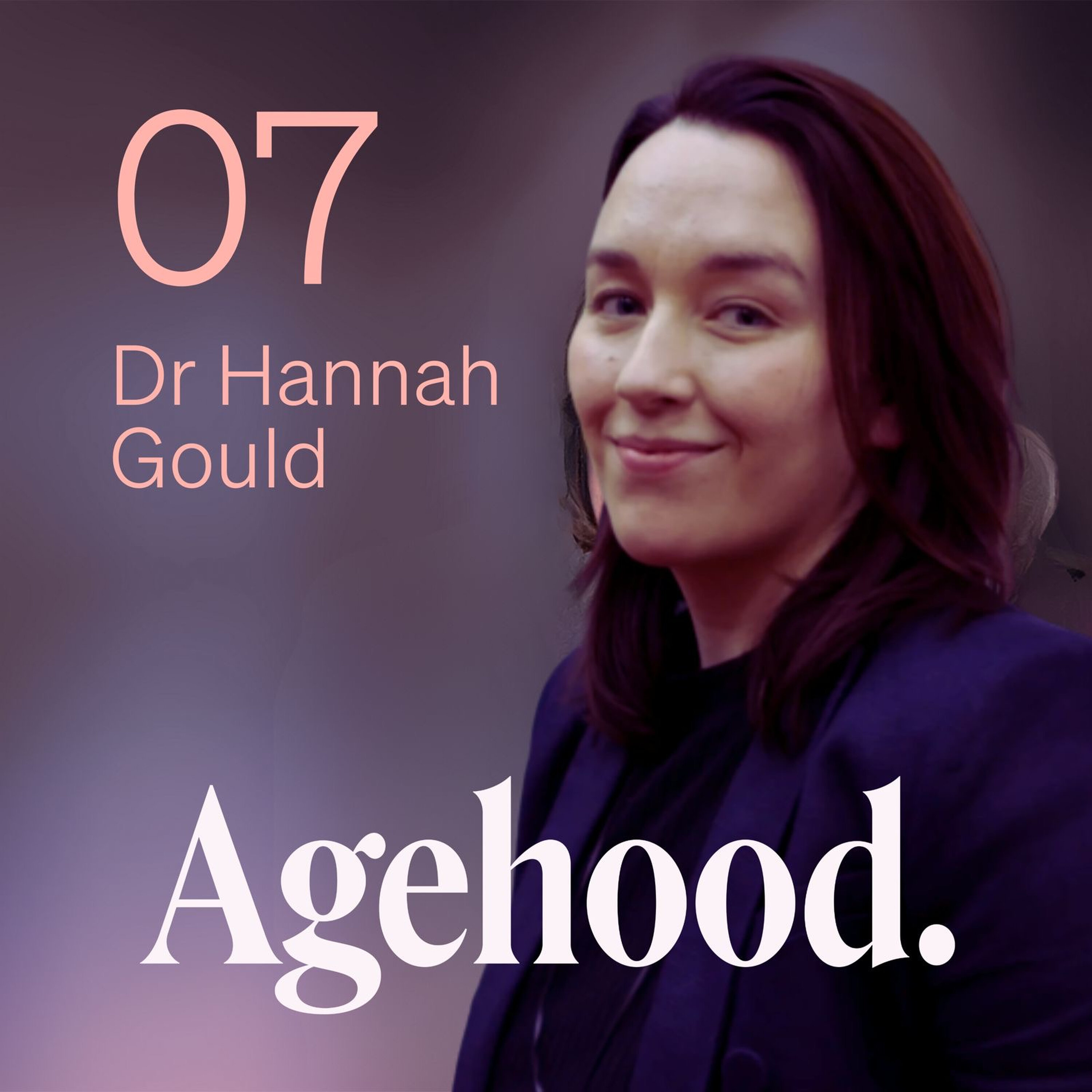
Funerals, PowerPoints & Party Pies: Dr Hannah Gould on doing death better
This week on Agehood, we’re diving into one of the biggest, hardest, and most universal experiences we’ll ever face: death. But not in the way you might expect.
Dr Hannah Gould is a cultural anthropologist and researcher at the University of Melbourne’s DeathTech Research Network who is reimagining how we mourn, memorialise, and find meaning in the end of life. Drawing on both her academic work and personal experience of losing her father at 23, Hannah brings a compassionate, curious, and refreshingly honest lens to the conversation.
If you’ve ever wondered what a “good death” looks like, or felt that our grief rituals aren’t quite enough, this conversation is a starting point.
FIND OUT MORE
If you’re caring for aging parents, navigating your own next chapter, or just trying to keep all the balls in the air—you’re not alone. At Violet, we offer free tools and support to help families navigate the last stage of life with care and confidence. Visit violet.org.au to start the conversation.
CREDITS
Host: Melissa Reader
Guest: Dr Hannah Gould
Executive Producer: Lize Ratliff
Find out more about Violet at violet.org.au
Agehood is the podcast that finally says what we're all thinking but rarely saying out loud. Hosted by Melissa Reader, CEO of Violet, we have the conversations that matter most: watching our parents age, being everyone's go-to person, the mess of love and duty, what it really takes to care for those we love, and yes, death, dying, and loss.
You'll hear Australia's most trusted voices, from beloved broadcasters to respected experts, vulnerably sharing their own stories alongside practical guidance that actually helps. This isn't about having all the answers—it's about asking the right questions and knowing you're not alone.
See omnystudio.com/listener for privacy information.
Transcript
Hi, I'm Melissa Reeder. Welcome to Hood, the podcast for people who are quietly carrying it all. Aging parents, adult kids, work, life, love and their own next chapter. If this is sounding like you, well, you're in your age, Hood, and. And it's time we talked about it. As we're learning through this podcast, the last chapters of Life and Death are a process, but they're ones that we really rarely talk about until it's too late. But that's something that my guest today is hoping to change. Dr. Hannah Gould is a cultural anthropologist working in the areas of religion, technology and death. Through her work at the University of Melbourne's Death Tech Research Network, she's exploring how we mourn, how we memorialise and how we make meaning, especially in an increasingly digital and secular world. Hannah wants us to get better at death as individuals, within our families and as society. And in this episode of Agehood, Hannah's joining me in the studio to talk about losing her own father at 23, the strange comfort of academic frameworks and why we urgently need to rethink how. How we support the sandwich generation, starting with something as simple and maybe as overdue as extending bereavement leave. We also talk about why our funerals now feature so many PowerPoint slideshows and bad party pies. And yes, how Australia has exported that to the world. If you've ever wondered what a good death looks like, or whether we're all doing grief wrong, this one's for you. Today's episode of Agehood has been brought to you by Wellways Carer Gateway. Wellways deliver free Carer Gateway services across Queensland and also across parts of New South Wales. They're designed by carers for carers, and the services really focus on building skills, easing stress and helping you to stay strong in your caring role. Because when you look after yourself, you're in a better place. To care for the people who need you, call 1-800-422737 or search Wellways Carer Gateway to connect with your local team. A will is vital, but it's not designed to keep up with all of the personal, the practical and the financial details of our modern lives. Things like passwords, bank accounts and bills often go unrecorded. And while life is complicated, a legacy doesn't have to be. That's where a letter of wishes from today's sponsor, Bill Will, comes in. It's a simple and secure way to reduce stress, for your loved ones, to share your values and preserve your voice. And it can save hundreds of Hours of admin down the line. Visit billwhill.com au to get started.
Doctor Hannah Gould, welcome to agehood. It is really lovely to have you here. Tell me a little bit, you know, what drew you to this? Where did that come up for you and what. What were the decisions or the life experiences that brought you into this area.
This part of research? Yeah. So, I mean, I didn't really intend at all to set off to be like, I'm gonna have a career researching death. I was an undergraduate anthropologist and really, really interested in religion, really interested in things that people hold as sacred. Kind of what that was, how it was that an object could become more than an object, that it could become imbued with the spirit of a God or somebody's memory. And that could be something similar, you know, as simple as, like, an heirloom that you have that reminds you of someone who's died and you can't possibly throw it out, even though you logically know it's not them and you know, they're not connected to it. And as often happens when you're, like, researching this area, the personal kind of combines with a professional. And I was in my honours year in just finishing up my undergraduate, and my dad died. I was 23, which at the time felt very mature.
Of course, it was a real thing.
Where I was like, well, we're so clever. Also, you know, this is the oldest I've ever been, so how could I ever think I would be young? I felt, you know, like, of course I'm able to handle this and. But, you know, a decade and a half later, looking back onto, it is obviously a very shockingly young age to lose your parent. And I think my dad and I had this, like, very close relationship as well, like, you know, real daddy's girl. Like, this was kind of really important personal relationship for me. And I suppose, you know, most people would potentially be expected to kind of, therefore not look into death and dying much after that. But there's a tendency, whether or not it's good or bad in academia to kind of study that which you do not understand. So that really led me to study, think, you know, critically and start researching about death and dying and what are the things that we leave behind and how do we. Yeah. Use particularly objects and material culture to connect with the dead.
Wow. I have so many questions.
Yeah.
Just off that little introduction, do you think that you. Your work has helped you process that loss, that even that experience as part of your life? Do you think it's been a. A way to process it or make sense of it.
Yeah, I think in some degree, I think. I actually think that the analytical side of my brain has really helped from having that kind of scaffolding. It helps make things be put into sense. You know, things that you experience that you go, oh, that's quite normal for Australian death care.
Or I have a framework for that.
Yeah, I have a framework for that. Or, oh, okay, here's a model. You know, academics love a good model, but I'm not sure that you can intellectualize grief to that extent. And I think many academics try to do so and intellectualize emotions, and it's not always successful. And it's never. It never. It never really is successful. At the end of the day, I think it breaks down. So, yeah, I think more of the emotional work has had to be done alongside that.
Yeah, of course, there's no perfect methodology for grief.
No. And also I think if nothing else, though, being kind of as an anthropologist, looking not just at my own society, but looking around the world at the diversity of all of the different ways in which people do death. They do grief very, very differently. And none of them are right or wrong. Like, there's no. You can't point to like, X culture or X historical moment in which we've solved death. Like, you just don't solve it, you don't make it better, you don't fix it. And I think that has been very comforting. If nothing else, it's like, you know what? Humanity does this really, really, really differently. And there's no one golden rule.
Well, that is one of the things.
I was very keen to talk to you about.
So let's just jump in, go there. So, yeah.
What do you see in your work around different rituals, different practices, different beliefs in different cultures or traditions that. That strike you in a different way, Whether they're different or they're meaningful in it. Like, what would you share when you. When you think about different cultures?
Yeah, I mean, it's interesting because it's not just cross culturally, but it's also within our own culture. So I was thinking the other day about Victorian mourning era. Right. So we think about Queen Victoria losing her husband Albert, adopting black dress, wearing black for hundreds and hundreds of hundreds of days, you know, until the end of her life, never really coming out of formal mourning. Right. And that was a period in English history and Australian European history in which, you know, mourning or, like public grief was beginning to be kind of criticized and disappear from public spaces. So we used to have these, like, really big processions Right. Victorian elaborate mourning culture is beautiful. Big processions of people through the streets with the carriages and the hearse and everything else. I think the image I always think of is like the funeral of the suffragettes, for example. You could see those women all together walking through the streets, but, you know, of a trade unionist, of a politician or whoever it is. And then grief kind of disappeared from the public view for a really long time and became this more private thing. And then perhaps, I suppose now with the Internet and public mourning and social media, are we seeing it re emerge right, as this kind of public act and public space and that sort of thing?
And we've had some very public, high profile deaths, haven't we, in the last couple of years? The Queen, we've very recently had the Pope and there's. There's just such an outpouring and almost like a spectacle, of course.
So death studies scholars in the west will tend to point to Princess Diana as like this turning point for public grief. And I think it was because her life was so hypermediatized. Like she was in magazines, she was on tv, she was everywhere. And so people had the capacity, therefore, to form a parasocial relationship with her, to feel like I knew her personally, even if that was a media presentation. Right. And so then when that person dies, you grieve them personally. And I think that's. That's quite common these days. You say with the Queen, with the Pope. But I think, you know, when I teach death and dying, I always ask my students this, you know, like, who was it for you? Because I think everyone usually has like their celebrity who. That really hit home.
What do they tell you? Oh, well, what are the most common?
They're all young.
That's why I'm asking. I'm fascinated.
A lot of them, I'm like, I don't know who that is actually. A lot of them. The singer from One Direction.
Oh, yeah, right.
Liam, when he died, that was a big kind of touch point, I think it was. Because that's like a pop star, an uber pop star from their child.
Heath Ledger's death might have been a bit too.
Yeah, I think it's quite generational and it's quite. It also can be quite specific to the type of. Type of media, type of person, you know, you are. Like, for my mum, I was just asking my mum the other day and she was saying, oh, it was the founder of the body shop, Roderick. And it was just like, you know, this was the person that I really mourned. I really looked up to Her, Anita Roderick, I think her name is. And then when she died, that was really mournful. And I think for me it was Anthony Bourdain, you know, because that was somebody that I really looked up to and watched his media and, you know, appreciated. So it is this kind of thing, all of which is to say that even within our own culture, like how we're supposed to do death, how we're supposed to do grief, you think it's hyper personal and think it's like this psychological internal process that no one understands, actually. It's like really cultural is really determined by what our society thinks is good grief or bad grief or proper or what time you're supposed to do it, how long it's supposed to last, how quickly you're supposed to get out of it. Are you supposed to wear black? You're not supposed to wear black. You know, all of these things that I think we tend to assume are individual or emotional turn out to be cultural and social. I mean, that's like a classic anthropologist answer is, isn't it? But it is. It is. That kind of. That is what fascinates me is that these kind of forces that we didn't really understand are governing our lives in that way. Lives and deaths.
You explored some of these themes in a series recently on SBS with Ray Martin.
Yes.
It was so great to see you as part of that. I think it was called the Last Goodbye. What did you learn during that? Or what surprised you? Because, I mean, it was just brilliant to see someone with Ray Martin's profile step into this space and I think think about what, what that Last Goodbye means and particularly in the context of an aging population, which he's part of. Yeah, how did that go?
I think. Yeah, exactly. I think the initial kind of idea for the series was that Ray had just hit the average age of mortality for Australian men. And I think for him himself that was quite confronting. Like he hadn't really thought about death and his own death. It was always something far in the future, despite being, you know, late 70s, early 80s. I won't give it away. And as someone who thinks about death all the time, that's always quite interesting to see somebody, I suppose, like, come to those realizations and have those moments of like, oh, I'm There will be a body to handle that someone has to make a decision about, or, oh, gosh, like there will probably be a funeral. Like somebody. They will probably try and do a funeral for me. And in the case of Ray, it's like, well, they'll probably try and do a public, you know, state funeral for you. Are you comfortable with that? Are you not? You get to make those decisions. And then I suppose also him coming to that and actually finding that the available options or what he thought was kind of the way things should go were not so satisfactory that he wasn't. He wanted to do something different and wanted to do something more creative or experimental and which is totally possible, but he just needed to give that a.
Bit of thought, which is the bit we don't do.
Yeah, I mean, and, you know, we do it. We do it too late. And it's. I think that's probably the most frustrating thing when I'm talking to people is not that what they want isn't possible, it's just that they need to kind of put their hand up and ask for it or demand for it and make those decisions. Yeah.
It's this almost perpetual problem of too little too late. Whether that's about your healthcare wishes and preferences or it's your financial and legal matters.
Oh, yeah.
Or your memory and legacy or just your preparation for that life chapter. Even people who I have interviewed who might arrive at the interview and say, well, I'm actually a really organized person, so you're probably not going to learn very much from me. But I say, let's have a chat anyway. And so many times they might have a will and a power of attorney in place, which is great because not enough people do. But then they'll say, I've never thought about my healthcare preferences. Wow. Okay. So now I'm not as organized as I thought I was going to be. So a big part of what we're trying to do is open those conversations and help people think about a meaningful plan for really all aspects of that chapter of life. And some of those aspects are going to be more or less important to certain people and their families.
Yeah.
But they're all part of that stage of life.
I mean, it's. It's hilarious. The number of like, death study scholars, professors of death and dying in religion who do not have a will, do not have or do not do not have a medical power attorney, don't have an, you know, advanced care directive.
Like the plumber with the leggy tap.
Yeah, like the plumber with a leggy tap. Like the doctor who smokes like the. They often have quite strong kind of inclinations about what they want or do not want. Like, I have a mentor colleague of mine who the other day came out and was like, well, I don't want a funeral. And I was like, well, this is the first we're hearing of this and we all were planning, you know, if you were to die, we were going to give you one. So, you know, this might be a good place to start the conversation. But, I mean, that is how the nature of taboos work. A taboo is. Is uncomfortable, not just because it's distasteful or scary, but the way that taboo works, actually, is that you're afraid of it because some part of you believes that talking about it or thinking about it will bring it into being. It's like a supernatural force. Superstitious, almost superstitious. And the challenge for that as well is also on the other side. So part of the work that I do is I teach. I design this course and teach a course for medical students at Melton U. Yeah. So it's a. It's a course that we've taught for about three or four years now. It's an elective for the first year medical students. And it's just like Death and Dying 101. And it's been great, like a surprising uptake of students. You know, they had lots of different options and perhaps, you know, unsurprisingly, perhaps the two most popular options were medicine about sex and medicine about death. But we got a huge number of enrollments and the students are really fascinated by it.
Is that about communication about death or, like, what do you cover in that? Because I've heard often that we don't do enough. We don't in medicine. And people learn by life experience and by great role models, or unfortunately, we.
Chuck them into hospitals on their first rotation and someone dies in front of them and they're ill prepared to handle it. Right. Or they're in an observation in a GP's office and the GP is delivering, you know, terminal news and they get quite. They're unsupported and they're shocked by that. So, I mean, I have a lot of compassion for how medical doctors are trained like that. A lot of them are very bad at talking about death, but that's because no one's told them how to talk.
About an easy thing to do.
And it's not an easy thing to do. So that course is really broad. It's everything from, you know, debates about where people should die, voluntary euthanasia, debates about, you know, we even go through, like, funerals, different cultural religious customs in Australia. Cremation versus burial, you know, should you go to a patient's funeral? All these kind of questions. But then it does focus on communication. Right. So how do you tell somebody? How do you tell somebody that we think you're going to die? Right. And talking about using the D word and making sure that people understand. Because we have very good evidence that patients really want clarity.
Absolutely. Like imagine how hard it is for that clinician to when they've got really full waiting rooms, very distressed families, 15 minute GP appointment in a 15 minute block. That's right. So I am not suggesting for a second that this should be easy or should, like, it's really complex work. But you're right. I mean, all the evidence says people want that clarity, they want it delivered to them in a gentle, appropriately paced way.
But it's part of the challenge that, you know, in the medicalization of death, as with the medicalization of childbirth, a conversation that probably would have happened with your priest has become a conversation that's happening with your doctor. Right. So it's like all of a sudden this, this, you know, specialist or GP is being given vested the power to tell you, you know, we think you're going to die. This is when we think you're going to die and where and what's that going to look like? And this is what we're going to help you with these medications or these supports, this is what's going to look like. But that's not a conversation that medical professionals, historically, if you take a long view, this is not a conversation that medical professionals have always been a part of. Like, it is a kind of quite recent development that medicine has taken over death to being the primary authority on death. And I think, you know, maybe it is part of solving that equation is getting back that multidisciplinary team. Right. And seeing more of a role for things like chaplaincy, but spiritual care, advisors and, you know, certainly I think it's no surprise to know that nurses are often much better at these conversations than doctors.
Yeah, I hear that all the time too. And also, and I think this is, you know, what I've been learning through this work over the last couple of years is people are often thinking about Mum being well and shopping today or Mum being dead and there's not enough in between around. This is a stage of life where Mum is in her late 80s, her early 90s, things are going to start to look different, like their developmental milestones in reverse. So there's a whole physiology there that we can use to make sense of it, but we don't talk about that as a life stage.
So one of the most interesting statistics is the distinction between life expectancy and healthy life Expectancy. So like life expectancy in Australia, for someone born today, they can expect to live 83 point something years.
We just had Bernard Salt in here.
So yes, we're 83 point something years. That's the life expectancy. But healthy life expectancy pregnancy is something like 70 point something something years. For the who like around the world.
70, not 70 something to 70.
Right. And so what that basically means is that all of us can expect to have, you know, 10 plus years of infirmity at the end of our lives, if we're lucky. Right. If we're lucky, best case scenario, we make it to old age. Right. And I think that that is the other thing that's really changed about death and dying, that is part of this bigger demographic change. Right. Is that it's kind of extraordinary, actually. I think it's. We don't celebrate enough and I think it's kind of amazing. But like, death is primarily a function of old age in Australia. That's amazing.
70% of deaths or something.
Yeah. My grandparents each had 11 siblings and hardly any of them made it out of childhood. Right. Whereas today all of my peers expect their kids to outlive them and to make them all the way through their life. It's amazing. Like, childhood mortality statistics have massively decreased in Australia. We've done really well. But what it means is that death now is about old age, is about for most people, is about, you know, those last 10 years of their life. And it's a thing that, you know, people have started to call and this is what it's called prolonged dwindling. Right. Prolonged dwindling is how a larger and larger percent of people die.
Gosh, that's a tough term.
It's a tough term, but it's.
So I'm thinking.
I'm not. It's not a great term, actually.
No, it's kind of wrenched my heart a little bit in my chest hearing that term.
I quite like the verb dwindle. We don't use dwindle enough.
I'm not sure what I like dwindle. I'll think about that.
From the unpaid labor propping up our age kit care systems to the rise of professional death doulas. Coming up, we explore who's really doing the work of dying and why. It's time to rethink what community care looks like. As a carer, it is not always easy to access support. And that's why Wellways Carer Gateway meets you where you are with walk in hubs online registration and wander the mobile support service, call 1-800-42737 or search Wellways Carer Gateway to find the support that's right for you.
It really makes me think about this idea of the growing care gap. So you know, we have this enormous five fold increase in the number of people reaching 85 by about 2031.
Extraordinary.
We have limited residential aged care beds and you know, that's not where everybody wants to go. It's the right choice for many at the right time. But most people want to age in place. And then we have the incredible kind of multi generational care demands that are now falling on the sandwich generation and.
Women, two thirds of which are going.
To be women, they're going to be probably eldest daughters caring for parents.
Can we have a moment to talk about eldest daughter phenomena?
I'm one of them.
Tell me, tell me what I need to do. I'm an only daughter, I have an older brother. But like eldest daughter syndrome or eldest daughter phenomenon is like this kind of phenomenon within healthcare and death care where it is kind of this like paraprofessionals who are relied upon to care for their parents. Right. Like these are the people that are ferrying their parents to medical appointments and they're the keeper of the binders full of medical information and the organizer of the tests and everything else. One of the best analyses that I saw of the, the death doula phenomenon, like the rise of the death doulas is, is that they are paid for eldest daughters. Right. That this is a group of people whose profession is basically to function how an eldest daughter would, which is to provide non medical but essential care for people who don't have that kind of support. And yeah, this is why I'm always, I'm really a strong advocate for community based models of death care. I think that we need, you know, once you accept that disability and aging are part of everyone's life story, like this is a condition that we all move into and we'll all move out of. But therefore that makes aging and dying a community, a whole community responsibility. Yeah, I really agree with that. But that I'm always quite skeptical. I'm always a bit worried because when people say community, I of go, well who in the kids?
What does that actually mean?
Who does that mean? And that often means eldest daughters who's.
Typically about 58 according to the research. And because she's still raising kids, they might be late teens or early 20s, but they don't stop needing her just because her parents need her more. They're probably living at home, living at home because of the housing crisis, you know, the cost of living. And a lot of these women are juggling their own work commitments, career commitments, finances, relationships, and somewhere their own messy, like, magic of well being. Right in the middle of that sandwich.
Yeah, that little thing. Yeah, it's really concerning. And I think there is a lot of unpaid labor that is just totally being taken advantage of within the system because it's plugging the gaps. Right. Like this is what we are relying upon. And as you would know, you know, this is something that's only going to become more difficult as we head towards peak death.
Yeah.
Right. So our demo, that was what Ray.
Martin used, isn't it, in the episode Peak death. Peak death. I've just remembered that.
Yeah. So peak death is a phenomenon that's begun to be talked about in kind of scholarship and academia. And it's, it's just a function of our demographics. Like if the baby boomer generation, I think this year the youngest baby boomer has become an older Australian.
Yes.
So 65 plus or, you know, however the ABS clarifies it. And all that just means is that in the next kind of two decades or so, we're going to have more people dying than ever before. And that's not necessarily a problem for some parts of our death care system. Like we have probably enough funeral homes, we probably have enough crematoriums. Like some parts of our death care system are going to hold up to that. Other parts of our death care system.
I'm quite worried about, extremely worried about palliative care, aged care, dying hospitals, hospice hospitals, and this huge misalignment between what people actually want and how their experience plays out. So there's human cost, but there's enormous economic cost.
Yeah. I mean, and look, as much as I just, I find it kind of slightly distasteful to talk about these things in terms of like productivity for the economy. You know, the average. For every death. I think they say that an average of nine people are deeply, insignificantly bereaved. Yeah. That they need to take leave. Right. And that means that that is nine people who are not going to work. Now our bereavement leave is pretty terrible. I think it's two days.
It's terrible. What about our system of grief and loss? Support is kind of non existent.
Griefline was just defunded.
Yes. But the need. Yeah, you've just highlighted nine. Nine people who need support for every one person that dies. The system is nowhere near that.
And the system is nowhere near that. And it's a really, it's really challenging and really difficult sometimes to advocate for change in that space, as I'm sure you're very aware. Yes, I'm sure you're very aware because partially because I think no one that you talk to knows that this is untrue, but it's. That to be. No one wants to talk about it. No one wants to think about it because they don't like to think about it happening to them. And that's frustrating. But I also feel a lot of compassion for that. You know, that's a very human thing to open the laptop, see the latest headlines and then, you know, New York Times and just close the laptop.
It's the radio station you'd rather turn off. Look, I understand, but I also think for where we are in society, we actually, we owe it to ourselves, we owe it to our parents and our partners to start to do this better. And I'm not saying for a second that it's going to be easy, but I genuinely believe it can be a lot better than it is today. I think that's, that's the work we have to do. I'm really interested to talk a little bit more about some of the new rituals you're seeing, particularly around burial. I've seen some amazing work in the States and I know you're right across that. Give us like the headlines. What are you seeing that. That are kind of. That's emerging in, in that area.
I think, like thinking broadly about both funerals and then also what we might call body disposal, body disposition, how we choose to handle human remains. Probably the biggest, like two biggest trends we're seeing is personalization.
Yeah, right.
And that is linked to secularization, people turning away from religious organizations, not necessarily turning away from spirituality, but turning away from kind of the Christian church in many cases, or turning away from like.
Religion service as it was traditional, as.
It was traditionally done, and what it means, what it should be, and being way more creative and hyper personalized. Right. Like, dad loved fishing, let's do, let's sprinkle his ashes from a fishing boat, you know, whatever it is. Or the classic, you know, we're in Australia, the classic footy jazz are on footy, footy jersey on the coffin, which has just become so normal these days, but internationally is just kind of unheard of in many places. So there's a lot of personalization. And then the other one is, it's good, it's great, it's great. I, you know, I think I have, you know, do what you want to do. I think go out with a bang. Right. If you're able to. You know, we always want to make sure that there's. There's possibilities for everyone and they get to do that.
I went to a funeral with my dad just a couple of months ago of a very good friend of his. And so my dad was really emotional on this day. We flew up to Brisbane. Like, I just needed to be his eldest daughter.
Yeah.
And his friend, who had had a cancer diagnosis, had completely designed his own funeral. Love it. And had chosen the playlist. And so it opened with AC DC and in the first like 10 seconds, I was really rattled. I was like, whoa.
Yeah.
But the more I sat with it and I really got a sense of who this man was and he was beautiful. And I left that service feeling like that really was about that human. That was a tribute to him. It had a personal resonance to who he was. And that's sometimes missing from some of those. More.
Yeah.
Prosaic, kind of formulaic.
I think there's beauty in both. Like, I think there is something beauty in the repetition of words that have been repeated over and over and over again. Ashes to ashes, dust to dust. I think there's a great comfort that a lot of people find in that. But yeah, I mean, two things on hyper personalized funerals. One is that the. One of the greatest stories I've ever heard is of a woman who also designed her own funeral and was a massive Western Bulldogs fan and requested that halfway through the funeral, everyone watch the third quarter of the premiership winning game. And they did, like, everyone in the funeral just. And they're like, and now we're going to show the third quarter of the Western Bulldogs winning the premiership. And you know, it's kind of ridiculous, but it's what she wanted.
It's what she wanted.
And I think the other thing to say about like hyper personalized funerals or, you know, acadaca and like secularization, that sort of thing is like, I. I think it's kind of beautiful how people have been able to make meaning from nothing. Right. That like, people have been able to say, you know, I don't need. It doesn't need to be much. It can be a candle lighting, it can be a song, it can be a reading, whatever it is, but we can make it meaningful for that person. Yeah.
And I'm really interested in how that changes those anniversary days over time. So you use that example of fishing. That's a beautiful thing for that family if they can just actually go fishing on their dad's anniversary of his death rather than sit and struggle with that day and not quite know what to do.
And I will say, like, this is one of the things that religion really does well. Like religion, for all, you know, people have lots of different views. I'm a religious study scholar, but religion does these kind of traditions very well. Look at the Catholic Church. It is a time machine. It has passed down the same religious rituals for hundreds and thousands of years like this is. And so it sets up a timeline for your mourning. Right. You go back every week, every month, every name day, every death anniversary. And I think. So that would be something nice if more secular, personalized rituals could do that.
Definitely starting to see that. Really wonder what you're seeing around the role of technology too, in that hyper personalization.
Yeah, well, I mean, this is kind of. I think it's. I think sometimes we take for face value in Australia that the kind of celebration of life funeral, right. That funeral that you go in, we're probably all familiar. There's a music playlist and there's a PowerPoint slideshow of photos. Right. Like this is. These are completely normal for an Australian funeral. This is what happens. And then there's a moment they play the sad music and. And you see photos from their childhood and everyone cries and there's usually some.
Really bad party pies or something on.
A bad salmon party pie. I'm a big advocate of gourmet food at funerals. This is the one innovation I want to bring in is that everyone should eat well. But that whole kind of secular funeral model is actually an Aussie invention very much. I know it's really odd to say, but until the 1970s, we didn't really have a strong tradition of secular civil celebrants. Right. So funerals are mostly led by religious leaders and long story, but basically our attorney general at the time, Lionel Murphy, he introduced civil celebrity for weddings. So all of a sudden you didn't have to get married either at a church or a birthday marriages. You could get married by anyone who was registered. And one of the people who was registered, the first person he appointed as a civil celebrant was a young woman. She was, I think 26 or something at the time. And all of a sudden this kind of ritual power in our society that had been invested only in like ordained men was invested in her. And then like, you know, Lionel Murphy is a kind of a interesting radical reformist. And, you know, he also made a lot of Indigenous Australians silver celebrants.
But this started with wedding.
It Started with wedding celebration, branched out into funerals. And then from those funerals, Dali messenger and others, these kind of celebrants in Australia, like the celebrant. The idea of a celebrant is in many ways like a product of 1970s, 80s, 90s Australia, and that was exported around the world. Like, there's a very famous Time magazine article, you know, in the States, being like, look what the Australians are doing. They're having lay people conduct their rituals.
Right.
And so this is very. This is so common for us that we go to a funeral. And this is kind of what I expect. I expect there will be some eulogies, some music, a slideshow and a bad patty.
But I didn't realize that the movement started here.
It started here. And it's. And I think it is a real great example of that kind of secular personalization, creative death ritual that we're doing. We've exported it around the world and.
Then we've got, you know, the more extreme and more recent technology examples that are coming up with AI, where you can have a. Yeah. A chat with your dead father, which.
Is great and terrifying. It is.
It's somewhere in. I mean, I don't really have my head wrapped around it, to be honest. I can understand how it may bring solace to some people, but I also can't see the end of it. So I can't kind of contain it in a way that makes sense in my head.
I think it's. It's one of those things that it's, you know, people always tend to ask me for, like, you know, is this good for people or is this bad for people? You know, that's such a simplicity, you know, a simplification of.
Yeah, it's not that binary.
It's not that binary. Like, you know, is this good for grief? Is anything good for grief? Grief is pretty complicated. And I don't think you can say that grief is. You're doing grief well or poorly. Like, you know, grief is something that happens and you're in it.
And to hear someone's voice after they've died.
Yeah.
Whether that's going back to a phone message they left you or a video, that's precious and. Absolutely. Yeah. So this is really just a kind of progression of that. But the thing I can't really come to terms with is where does it end? How do you manage that in a safe way?
I think a lot of it, as with all kind of AI and kind of technology, for me, always comes down to these questions of like. Well, you Know, access and availability. And you know, who gets to have that, who gets to access that, how long, who controls it, who owns the information? There's a lot of kind of famous cases of kind of what we call almost like dead Necro tech.
Dead death tech, Necrotech Dead death.
So like all of these, kind of.
That before.
So all of these companies that have kind of. There's classic ones like all these companies that said, you know, upload all of your loved ones data.
Yes.
To our server and we will create a chatbot, an avatar, an avatar, a web page, memorial page that we will keep them alive forever. And then the companies go bust and they close down and the website's no longer accessible. And so you have almost a second death. Right. That, you know, it could be subject.
To some kind of security breach.
Well, this is like 23 years.
Avatar could.
Exactly. I feel very, I feel very confident my. My decision many years ago never to do a DNA test because I was like, I don't know who's that? You know, where that data's going. But, you know, this is also a concern with death tech. So, you know, I think there are many kind of creative, exciting possibilities for it. But I also do really worry about, you know, as with all of these things with technology, you know, the equity, the access, the cost also.
But it's on the same hand. It's one of the most democratized pieces of technology in many respects.
Yeah, it's. It's difficult. I mean, I have seen the one kind of extraordinarily compelling use of it, this technology in particular that I've seen is the Holocaust Museum internationally, but also here in Australia in the Sydney Powerhouse Museum, and they did oral history recordings with survivors of the Holocaust and asked them to record their stories. But also then using AI kind of created these holograms of people that visitors could then go to and ask questions and interact with and learn from. And obviously that's very controlled. It's very safe. Like, you know, we're not. Because obviously there's a lot of kind of potential to do harm to that legacy as well.
Yes.
But given how important those survivors stories are and you know, how old they are now and how few of them are still alive, you know, that is.
A kind of example.
It's a great example of how it can go really well. Of course it could also go really poorly. You know, it's a, it's a bit of a catch.
Yeah. We're still just in that figuring out space, aren't we? One of the things I am really enjoying seeing with the emergence of AI and tech in this space is just how sophisticated this idea of empathetic AI is becoming, that it can now, you know, could be having a conversation with us and recognizing that Melissa's getting distressed or sad or has stopped talking and adjusting and checking in in a different way and reframing a question.
It's.
They're really sophisticated tools.
Yeah, I tend to be on the kind of slightly more terrified, uncanny side of the coin. That's just because I'm slightly terrified on cutting technology. I'm just skeptical of all new technology and that's fine. But I think there are some beautiful, certainly some beautiful examples of it being used. And yeah, it's never as simple as yes or no.
It's not. It's going to get more complex.
It's going to get more and more complex. I just hope that when we kind of go down that road and develop that path, we kind of remember also, like the shared humanity of like, what we're doing and like what it means to be a mortal human being. And I think that, you know, I hope that it is used for death acceptance and not death denial. I suppose that's. That. That would be like, kind of the moral concern is like, you know, if you can just log in and talk to your deceased child every day for 50 years, why would you want to stop?
And therein lies the complexity.
And therein lies the complexity.
That's a nice way to get me to a question that I'm really keen to ask you. I've heard you say before that death isn't a moment. You know, it's a process. If you had the chance to redesign how we approach this, where is the place that you would start? What would be the piece that we could kind of identify and pick off and, gosh, work on, Given all your experience, what would that be?
So, I mean, there are so many things, like, I'm gonna throw out like five starting points and then I'll go with what I like. It could be like, you know, I would make a public death care option. I would have funeral arrangements and end of life hospice care as part of Medicare in Australia. I, I think it's ridiculous that if we don't have money, you don't, you can't access these kind of things. I would regulate the funeral sector better. I would, you know, all of these different things. But actually, in the last couple of years, having moved from someone who researches death and dying and writes about death and dying to now somebody who teaches death and dying, I actually think the starting point is to bring comprehensive death education into secondary school. Right. I know that's a big swing that I.
Outside of a religious paradigm, which is how it would have any traditionally come up in the classroom, it just doesn't.
Come up in the classroom at all. And I think part of it is because we have this presumption that children can't think about death or teenagers or you know, university students, whatever stage of education we put that into.
I love Maggie Dent's advice on this. She said if you've got kids, you've got to buy guinea pig and you've got to keep buying them because you'll probably have like five, six or seven guinea pigs die.
Yeah, my guinea pigs in childhood died because they were afraid of thunder. Like guinea pigs died really easy.
I think that's her point, you know, exposing kids to the cycle of life.
And death and kids are like extraordinary, resilient. But I think that having taught so many young people now about death and dying, thank God they're so much better than we are. Like they're really good and they want to know about death and they're interested and they're reflexive and they want to do it better and they want to do it differently. And I think that, you know, there's lots of different starting points, things that I would change conversations, I would start healthcare and aging and dying. But in terms of like broad cultural generational change, I think it has to be kind of conversations as part of our education system.
Yeah. Wow. Okay. Now I think that's a great answer.
That looks like a task.
Here's the next stepping that question because I think that's a very good answer, but is a long way away from realizing change just because of the, you know, the age and the kind of early career stage of those people. Given that we have got this five fold increase in people reaching 85 and we've got 5 million sandwich generation carers, what's the one thing that you would want to put on the table for where at. Where we're at today?
Why would you stop me like that? What is the one thing I would probably try and just make a really small but significant and quite costly intervention in our carer and bereavement leave, which.
Is currently two days.
Which is currently two days. I would just try and give people more time. Yeah, I would just.
I seems like a. I mean I know there's a huge economic tag attached to that, but in terms of making.
It possible, I'm not sure there is.
Yeah, people are just Tracking anyway, ism and absenteeism, because it's already there.
I would just kind of say objectively, we all know that two days is ridiculous. Let's make it a week. Let's make it two weeks. Most people are probably not going to take it. Right. Like we know, like people, people, you know, workplaces, all this kind of thing. I just would try and try and relieve some of that pressure and burden off working women in the sandwich generation in particular, in the same way that we've introduced like, you know, domestic violence leave, or we've introduced all these different kinds of leave. I think it's a small thing, but I think it would also signal that our welfare system is interested not just in life, but also in death.
Yes. And recognizes the role of caregiving and recognizes. Just a small shout out to corporate Australia.
Just a small shout out to, you know, Department of Health and yeah, corporate Australia, men. Just a small shout out to men. You know, eldest sons also could. Younger sons. Everyone could be part of this more because, yeah, I think it's a. I think whether we like it or not, it's something we're all going to realize pretty soon in the next couple of years and decades in Australia. So we should get ahead of it.
Thank you for coming in and sharing all of that.
Thank you.
I have learned so much, including the fact that necrotech is necrotech and a term. Great.
Stick with that.
With you, Hannah, always a pleasure.
Thank you.
If Hannah's conversation has made you think about how you could maybe plan for this last stage of life a bit better, Violet is here to help. We believe that the last stage of life deserves the same care, planning and attention as every other life milestone. And that's why we offer free support, guidance and tools for families so that no one has to face this chapter of life unprepared or unsupported. If you'd like some help making a plan, starting an important conversation, or you simply need to feel a little bit less overwhelmed, head to violet.org au to learn more. And if this episode has helped you, please share it with someone who needs to hear it. We'd love you to follow agehood. Leave us a review and join us again next week when we sit down with award winning journalist Geraldine Dug to talk about life after losing someone to terminal illness. This episode of agehood was brought to you by Wellways Carer Gateway. As a carer, prioritising yourself and your own wellbeing can be hard. That's why Wellways Carer Gateway is making it easier with Walk In Carer Hubs, simple online registration, and Wander, a mobile service bringing support to carers in their own communities, help is now more accessible than ever. Whether you're looking for practical advice, emotional support, or some help navigating other support systems, Wellways Carer Gateway can help. Call 1-800-427-37 or search Wellways Carer Gateway. Wellways Carer Gateway is providing support for everyone who supports someone else. Today's episode of agehood was was brought to you by Bill Will. Wills aren't designed to cover the full picture, especially when it comes to personal, practical and financial details. A letter of wishes from Bill Will really helps to fill that gap. From passwords and accounts to everyday instructions, it can save hundreds of hours of admin for the people that you care about most, reduce stress, share your values, and preserve your voice@billwill.com au.