
Grief Comes in Waves: The First Year After Losing a Parent
Grief for a parent does not move in straight lines or tidy stages. It comes in waves: long stretches of ordinary life, interrupted without warning by a memory, an anniversary or a place that knocks you flat. A wave does not mean you are grieving wrongly. It means the relationship still matters, and this is what that first year of waves actually looks like.
Why grief comes in waves, not stages
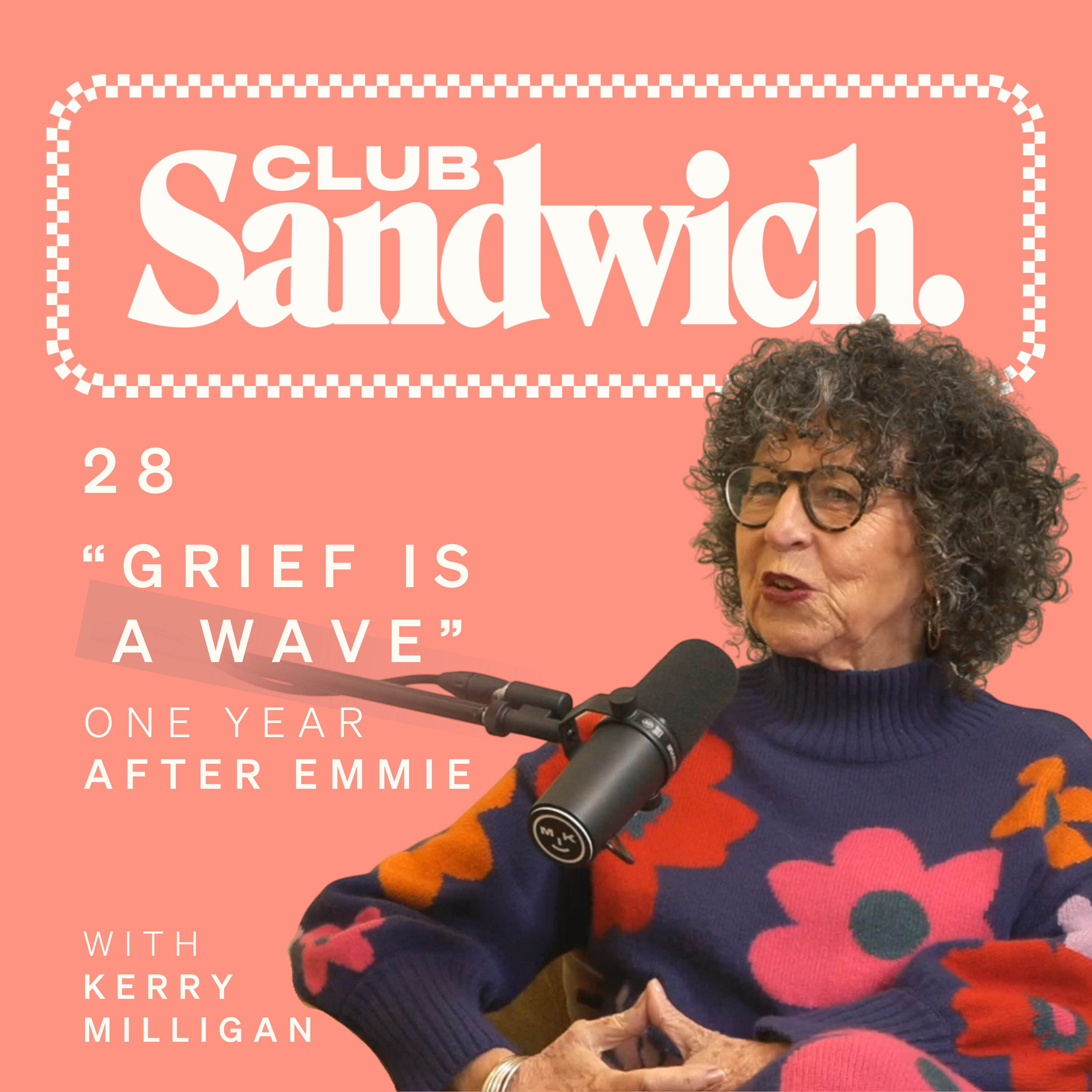
For decades, grief was taught as a fixed sequence: denial, anger, bargaining, depression, acceptance. Most people who have actually lost a parent do not recognise that shape in what they went through. Kerry Milligan, known to Australian audiences from Gogglebox, lost her mother Emmie a year before this conversation, after caring for her at the end of her life. Walking along a beach one day, she found a better description for what grief actually does.
"I actually realised when I was walking along the beach one day recently that grief is like a wave, that some days on the beach they're just little, little things, little rivulets of water that makes a really lovely tinkling sound. Other days it's really heavy. And that's what I think grief is like. It never really leaves you, it just presents itself in different forms."
That is the pattern worth carrying into everything that follows on this page: grief for a parent does not finish, it changes shape and spacing. Some days it is a ripple. Some days it is the wave that puts you flat on your back. Neither is a verdict on how well you are coping. If you are earlier in this experience, still having the hard conversations before a death, our guide to talking about death with your parents covers that ground. If your parent has already died, our guide to losing a parent covers what changes about this grief over the years that follow; this page stays with the wave itself, the first year, the anniversaries, and the specific things that set it off.
The first year: everything for the first time
The first twelve months carry almost every wave close together, because almost everything is happening for the first time without your parent: the first birthday, the first Christmas, the first ordinary Tuesday you would normally have called them about. About a year after Emmie died, Kerry travelled to Tasmania, where her mother had grown up, carrying a small portion of her ashes. She had already made a private ritual out of what was left.
"I kept three little bits. I kept a bit for me to put in a little shrine on the side table in my lounge room with a candle. And I light the candle every day, every night for Mum. And I kept another little bit for my grandchildren, so they've got it at their house. And I kept a bit to take to Tassie."
A shrine, a photograph, a candle lit at the same time each evening: small, deliberate rituals like this are common in the first year, and they do something practical as well as symbolic. They give grief a fixed, chosen place to land, rather than only the unpredictable one.
Hearing them everywhere
Grief in the first year does not wait for a ritual to arrive. Tasmania was where Kerry's mother had grown up and met Kerry's father, and where generations of the family before them had lived. Walking through the old part of Hobart, Kerry found herself ambushed by memory at every turn.
"every corner I turned, I would hear the voice of. Of my mother or my father or my grandparents. And they would say. The voice would be saying things like, oh, this is where I used to play cricket, or this was where I had my first alcoholic drink, or this was where I preached, you know, in the Methodist church. ... it was like every corner I turned, I kept hearing these voices. And I thought, God, it's like I'm being haunted by all these dead people."
None of that was supernatural, and Kerry is clear on that point herself. It was recognition: a lifetime of family stories, suddenly given a physical place to attach to. This kind of flooding, visual cues, smells and sounds all reopening the same memory at once, is one of the more disorienting parts of the first year, and it tends to be strongest in a place that mattered to the person who died.
Grief anniversary reactions
The same trip supplied the clearest anniversary reaction of the year. Roughly twelve months after her mother's death, Kerry quietly scattered the ashes she had brought into the Derwent from the back of the ferry to Tasmania's MONA museum. Soon afterwards, deep in the museum's underground galleries, she found herself suddenly and unexpectedly overwhelmed.
"So I'm really starting to feel very scared. And I eventually found the lift that takes you up to the surface. And I got out into the air and I did some breathing, deep breathing, called my fancy man. He calmed me down and, and that was it. But I, it was very. I was out of control and I'm sure it was the, the impact of the grief and the fact that it. I thought I was over it. Not over it completely, but I thought I was managing really well. ... And then it just hit me hard."
Nothing about the museum itself caused that. What caused it was the timing: a significant date, a significant act, and a body that seems to keep its own calendar regardless of how in control you feel the rest of the time. Anniversary reactions like this, a wave that arrives around the date someone died, or their birthday, or a milestone they are missing, are one of the best-documented patterns in grief, and they do not fade in a single year. Our guide to losing a parent covers how these waves can keep recurring, sometimes decades later, without meaning anything has gone wrong.
Grief triggers: the things nobody warns you about
Away from anniversaries and rituals, most grief waves arrive from somewhere much smaller: an object, a smell, a piece of music, or a person who resembles the one you lost. They are rarely predictable, and they do not wait for a convenient moment.
"I know that there are definite triggers. And for me, the ones that. The one. The major one for me is seeing an old lady with a walker straight away just start crying. Can't help it. Because it just reminds me of Mum, of Mum, you know, walking with her little walker. I just can't. Just can't do it. ... I can't watch anything where somebody or something is in pain, is suffering. I just can't."
Notice what is actually happening there: an elderly stranger with a mobility aid, or a moment of suffering on a screen, is not really the trigger. Your parent is. The trigger is only the door grief walks back through. Expecting that some ordinary things will do this, rather than being ambushed by them each time, tends to make the wave shorter when it comes.
Processing what's left behind, and getting support
Grief waves also show up in what you can and cannot bring yourself to do with a parent's belongings, and there is no correct order or deadline for any of it. Some things become manageable within months. Others take years, and some may never feel manageable at all, which is also fine. It is common to be able to handle clothes long before the smaller, more personal things, jewellery, makeup, the objects that sat right in front of them every day, feel possible to touch.
What helps, across the conversations behind this page, is rarely a technique. It is other people. Naming what you are feeling to a friend, a partner or a counsellor who lets you say the person's name without changing the subject does more than trying to push a wave down on your own, and talking to others who are further along, or further behind, in the same experience tends to make the whole thing feel less isolating.
If a wave is not easing over time, or it is stopping you from functioning for a long stretch, a GP is a reasonable first door, and grief counselling is not reserved for people who are failing to cope. In Australia, Griefline (1300 845 745) offers grief-specific counselling and support, and Lifeline (13 11 14) is available around the clock if things feel unmanageable; if you are somewhere else, your national equivalent will do the same job. If the person you lost was also someone you were still actively caring for, our guide to losing a parent covers the particular weight of grieving someone you cared for at the end of their life, including the guilt and the what-ifs that often come with it.
Frequently asked questions
Why does grief come in waves?
Grief for a parent rarely runs in a straight line or through fixed stages. It comes and goes in waves: long stretches of ordinary life, interrupted without warning by a memory, a place or an anniversary that brings the loss rushing back. Grief writing and counselling increasingly describe this pattern, rather than the older stage models, as a more accurate picture of what mourning actually feels like. A wave arriving does not mean you are grieving wrongly. It usually means the relationship still matters.
What triggers a grief wave?
Almost anything tied to your parent can trigger a wave: a place you visited together, a piece of music, a smell, an object, or seeing someone who reminds you of them, an elderly person with a walker, for instance. Triggers are rarely predictable in advance, and they tend to arrive hardest in the first year, when you are living through ordinary life without your parent for the first time. Expecting that some ordinary things will set it off, rather than being ambushed by them each time, tends to make the wave shorter when it comes.
Is it normal for grief to hit harder around the anniversary of a death?
Yes. Anniversary reactions, a wave of grief around the date someone died, or around the first birthday, Christmas or Mother’s or Father’s Day without them, are extremely common and well recognised in grief writing and counselling. The body often seems to register the date before the conscious mind catches up. A wave hitting hard on an anniversary, even years later, is not a sign that you have failed to move on.
How long do grief waves last after losing a parent?
There is no fixed timeline. In the first year, waves tend to be frequent and close together, because almost everything, a birthday, a holiday, an ordinary Tuesday, is being lived through for the first time without your parent. Over the following years the waves usually spread further apart, though they rarely stop altogether, and a wave can still knock you sideways a decade or more on, often around an anniversary. Our guide to losing a parent covers how this grief changes over that longer stretch.
What helps when a grief wave hits unexpectedly?
Give it a minute rather than fighting it; waves are usually short and pass through you if you let them. Talking to someone, a friend, a partner, a counsellor or a support line, who lets you say the person’s name without changing the subject helps more than trying to push a wave down on your own. Marking the predictable hard days in advance, rather than pretending they are ordinary, tends to soften the ones you can see coming.
Where to next
Grief that comes in waves usually sits alongside the death itself, and often the conversations that came before it. These guides sit closest to this one, or you can listen to Kerry's full conversation.