
Losing a Parent: Adult Grief, Guilt and Becoming an Orphan
You can be fifty years old, with a mortgage and children of your own, and still be flattened by the death of your mum or dad. This is what that grief actually looks like, and why it keeps turning up in the smallest moments of an ordinary day.
What losing a parent does to you as an adult
Losing a parent is not only the loss of a person. It is the end of the longest relationship of your life, the loss of the role you have held since the day you were born, and, when the second parent dies, the removal of the generation that stood between you and the front of the queue. That is why grief for a parent so often lands harder than anyone expected, including you, and why it keeps arriving in small, unremarkable moments long after the funeral is over.
It also tends to arrive at the worst possible time. Losing a parent in your thirties, forties or fifties usually means grieving while there are still young children at home, a job that will not pause, and often a surviving parent who now needs more of you. Grief has to be fitted around the school run. Our overview of what it means to be the sandwich generation sets out the wider squeeze, raising your own children while caring for ageing parents, that this grief lands inside.
If your parent is still here and you are grieving already, watching them change, decline or slip away in pieces, that is a real and separate experience with its own name. This page is the companion to our guide on grieving a parent who is still alive: one covers the loss that starts before the death, this one covers what comes after it.
Can an adult be an orphan?
Yes. An orphan is a person whose parents have both died, and that definition does not expire on your eighteenth birthday. The word simply gets used less for grown-ups, because past childhood it carries no legal weight and triggers no practical consequence, which is why so many people quietly feel they have no right to it. The term adult orphan exists precisely for this, and it is increasingly how people describe themselves after the second parent goes.
What the word is reaching for is an identity shift rather than a status. Something genuinely changes when there is no longer anyone in the world for whom you are the child. You become the oldest generation in your family. The person who kept the stories, who remembered you as a baby, who would have taken the phone call at 2am, is not there. Gohar Yazdabadi, chief executive of the Council on the Ageing in New South Wales, lost her father in February and her mother in April of the same year, after caring for them both.
"To lose a parent at any time is really difficult. To lose them one after another so quickly is heartbreaking. ... It's very funny because I was caring for them at the end of it, but when I lost my parents, I felt I lost my safety net. ... you're still their daughter, they're still your parents. And somehow still in all of that and with losing them, you still feel that that protection and that safety net goes along with them."
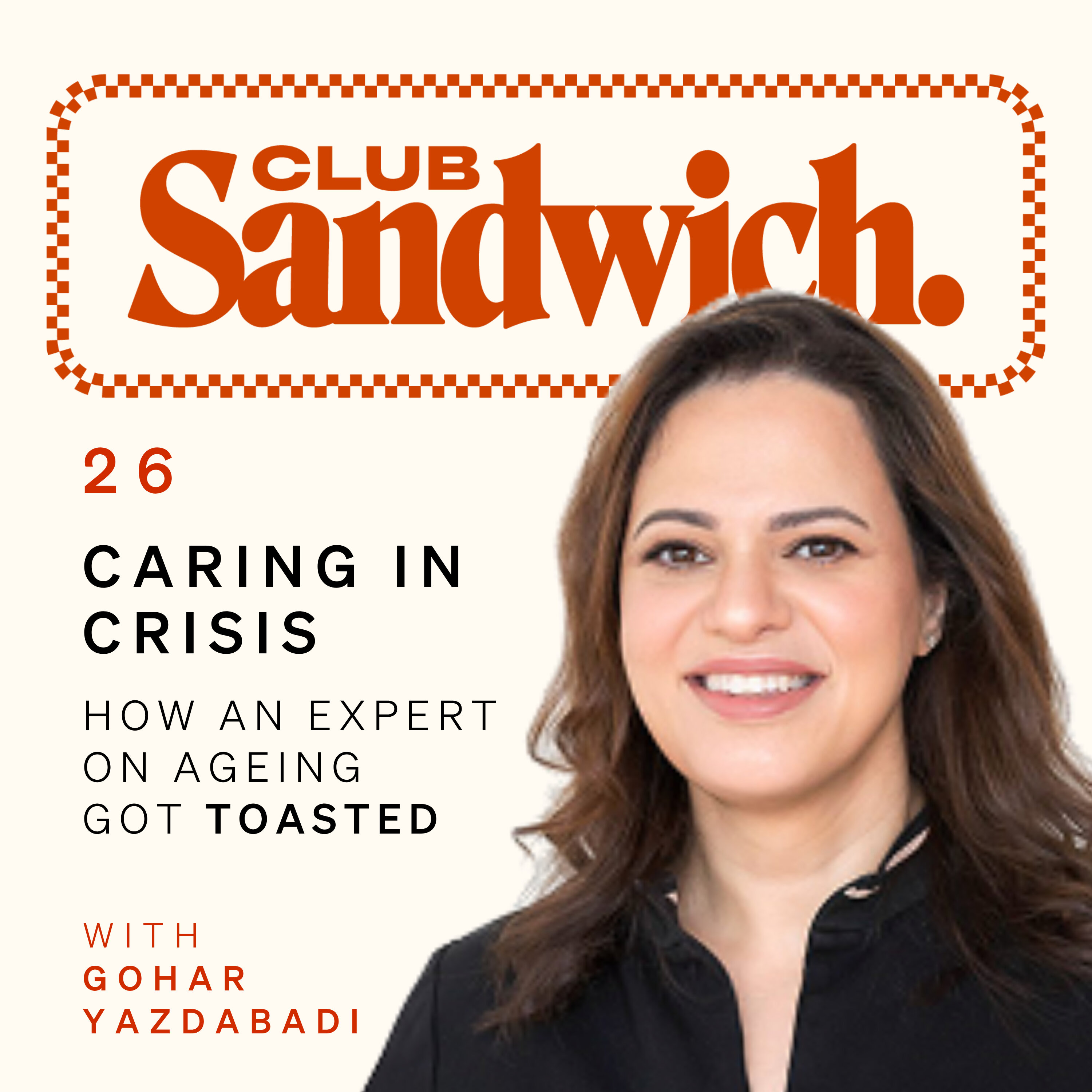
That is the part people rarely say out loud: you can be the one doing all the caring, the one holding everything together, and still lose your safety net when they die. Being the carer does not make you any less their child.
Losing both parents close together compresses all of this into one blow. There is no gap in which to absorb the first death before the second arrives, no surviving parent to grieve alongside, and often no household left to return to. If it happened that way for you, the sense of being knocked sideways is proportionate to what happened. It is not an overreaction.
Grief arrives in the smallest everyday moments
Most people brace for the obvious days. The funeral, the first Christmas, the first Mother's Day or Father's Day. What catches them instead is a Tuesday. Grief for a parent lives in the ordinary machinery of your week, because that is where they were: in the phone call you always made after something happened, in the job they always did for you, in the person who would have found your news interesting when nobody else would. Gohar Yazdabadi describes it through a short flight to a country town and a trip to the mechanic.
"I miss everything about my parents. ... I went on a flight to Orange the other day and it was one of those little airplanes and I got off and I wanted to call my mum and tell her all about it, but there wasn't going to be anyone on the other side. I took my car to the mechanic, which my dad used to do for me, and suddenly I was there by myself at the mechanic, without my dad being there. And it's those small reminders in everyday moments that make it really difficult."
These moments hurt because your habits have not caught up. Part of your mind is still running on the assumption that they are reachable, and each small collision with reality is a fresh, miniature version of the news. There is nothing to fix here. The collisions get further apart on their own, and it helps to expect them rather than be ambushed by them, particularly in the first year when almost everything is happening for the first time without them.
The guilt and the what ifs after a caregiving death
If you cared for your parent, grief tends to arrive with an auditor attached. You go back over the last months looking for the thing you got wrong: the appointment you did not push harder for, the day you were short with them, the visit you cut ten minutes early because a child needed collecting. Carers replay these on a loop, and the replay is rarely fair.
"I think a lot of carers are always thinking about the what ifs and the buts and I could have done more and I should have done more and I left something unturned and things like that. I think they're conversations that are often repeated in people's minds. You know, I think that's part of why the counseling is so important as well. It's not just the grief and loss, but it's the trauma and unpacking that."
The what ifs are worth taking seriously as feelings and not as findings. You were stressed in those moments because the situation was genuinely hard, not because you were a bad daughter or son. Guilt at that volume is usually a measure of how much you cared. Our guide to caregiver guilt works through the specific shapes it takes and what actually reduces it.
A particular version of this is regret about words. Many people come away certain there was a conversation they should have had, or a thing they never got to say. If that is the ache you are carrying, our guide to what to say to someone who is dying makes a point worth hearing after the fact too: if you loved each other for decades, you very likely said it a thousand times without ever using the words.
Losing a parent in your 30s, 40s or 50s
Grieving in the middle of life is grieving without space. There are children who still need dinner, and who may be grieving a grandparent themselves and looking to you to show them how. There is a job that gave you a few days and expects you back. There may be a surviving parent who has just lost their partner and now needs more from you than ever, and our guide to helping a widowed parent covers that particular kind of support. Bereavement leave assumes the grief is an event. It is not; it is a season.
The other thing that happens at this age is that people around you quietly discount the loss. Your parent was old, so it was expected, so surely it is manageable. That logic is everywhere and it is wrong. An expected death is still a death, and the length of a life has nothing to do with the size of the hole it leaves. Singer Katie Noonan, whose father died after a long illness while her own marriage was ending, is blunt about what happens if you push it down and keep going.
"if you don't process grief, you know, grief manifests and stress manifests physically in the body. And if you don't process it, you'll get very sick."
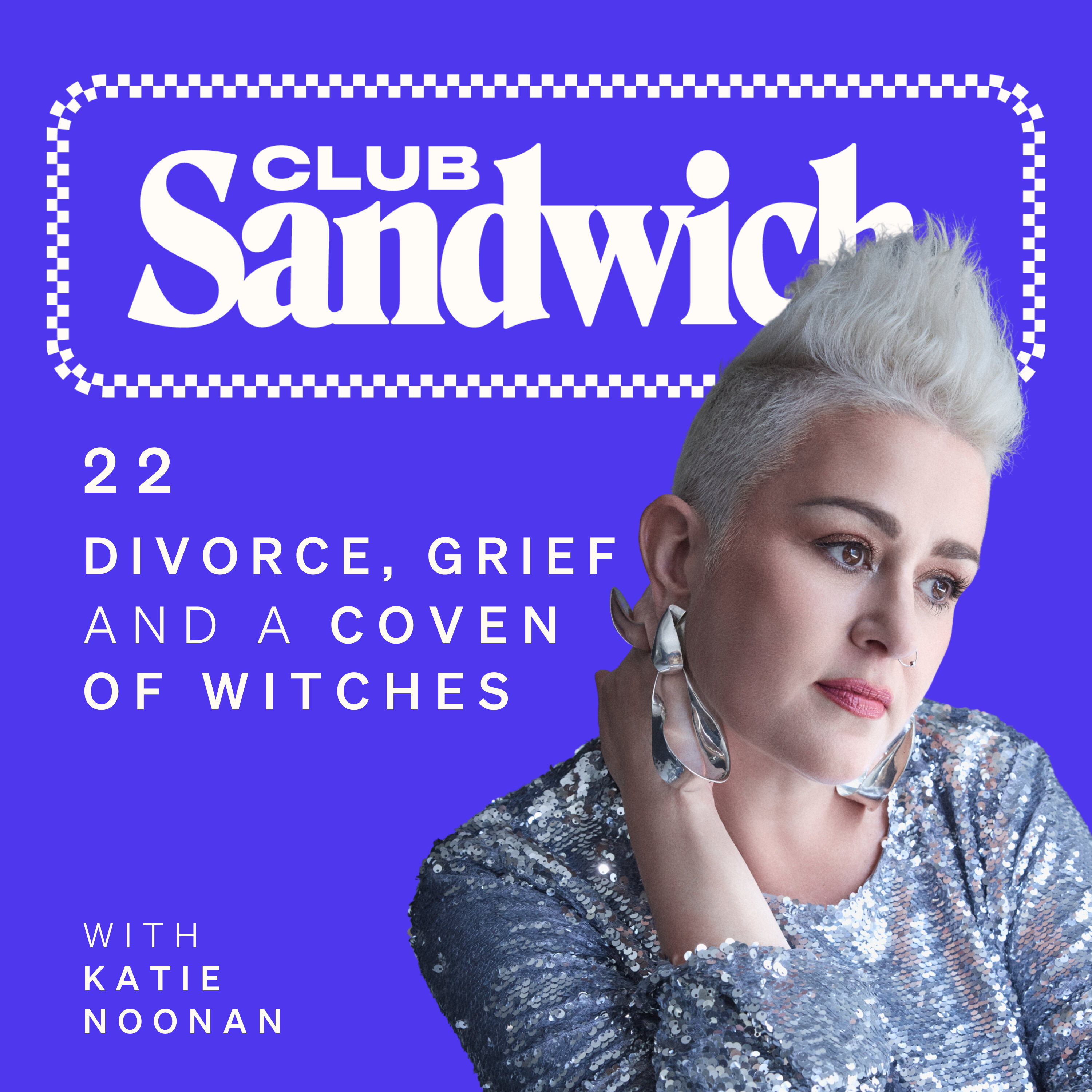
Processing it does not require a retreat or a year off. It means giving the grief somewhere to go: a friend who lets you talk about your dad without changing the subject, twenty minutes in the car, an anniversary marked rather than avoided. The thing to watch for is numbing it out night after night, which buys quiet in the evening and costs you the morning.
How this grief changes over the first years
Grief does not move through tidy stages and then stop. It comes in waves, and what changes over time is the spacing rather than the strength. The first months are the most relentless, because everything is being encountered for the first time without them. Later, there are long stretches of calm water and then, out of nowhere, a wave that puts you on the floor. Clinical psychologist Dr Emily Musgrave, who works with people in grief and loss, wants that understood properly.
"it might be 10 years, it could be 30 years. And you may find that on a particular day, in a particular moment, you absolutely knocked off your feet by this intense feeling. ... That does not tell us that you haven't grieved. It tells us that that relationship is deeply important to you"

That reframe takes a lot of pressure off. A wave arriving years later is not evidence that you have failed to move on or that something has gone wrong with your grief. It is evidence of how much the relationship mattered. The practical version of this is simply to see the predictable waves coming, birthdays, the anniversary of the death, the first grandchild they will not meet, and to plan a little kindness into those days rather than pretending they are ordinary. Our guide to grief comes in waves goes deeper into that first year of waves: the anniversary reactions, and the specific, often small things that set a wave off.
Remembering more than the last hard year
One cruelty of a long illness is that the ending overwrites everything else. The hospital corridors, the medication chart, the version of your parent who was frightened and frail: those images are recent and vivid, and they can crowd out forty years of a person. Many carers find their memory has been colonised by the worst twelve months.
"no part or period of a relationship makes that relationship or defines that relationship. ... something that I've consciously been doing is to remember the good times because it's very easy to forget that they even existed because you're still so caught up in that time when you were caring for them, when everything was so stressful. But there was so much joy in our relationship, there was so much joy in our family, there was so much love and excitement and all of those things. It wasn't just the last year that defines that."
Reclaiming the rest of them takes deliberate effort at first. Get the photographs out from before they were unwell. Ask their friends and siblings for stories you have never heard, which usually produces a parent you did not entirely know. Tell your children the funny ones. None of this is avoidance of the grief, it is the part of grieving where you give the person back their whole life.
The practical load, and where to find support
Nobody warns you that the caring does not stop when your parent dies, it just turns into paperwork: the estate, the accounts, the notifications, a house of decades to empty. It is exhausting, it is badly timed, and it is genuinely one of the hardest parts of the first year. We do not cover the admin here, because the official services do it properly. In Australia, start with the Services Australia guide to what to do when someone dies, and if the paperwork is landing on you because you held power of attorney, our guide to power of attorney and wills covers what that role does and does not oblige you to do.
For the grief itself, a GP is a reasonable first door, and grief counselling is not reserved for people who are failing to cope. As Gohar Yazdabadi points out above, what carers often need to unpack is not only the loss but the years that preceded it. In Australia, Griefline (1300 845 745) offers grief-specific counselling and support, and Lifeline (13 11 14) is available around the clock if things feel unmanageable. If you are somewhere else, your national equivalents will do the same job.
Frequently asked questions
Can an adult be an orphan?
Yes. An orphan is someone whose parents have both died, and nothing about that definition stops applying when you turn eighteen. The word is used less often for adults because it carries no legal or practical consequence once you are grown, which is exactly why so many people feel they have no right to it. Plenty of adults who have lost both parents do use it, and the term adult orphan exists for this experience. If it describes how you feel, it is yours to use.
What is an adult orphan called?
An adult orphan. There is no separate clinical or legal term and no formal status attached to it, which is part of why the phrase can feel like something you have invented. You will find it used in grief writing, in online communities and by counsellors, usually to name the particular disorientation of losing your second parent: no longer being anyone's child, and becoming the oldest generation in your family.
Is it normal to feel guilty after a parent dies?
Extremely. Guilt is one of the most common parts of grief after a parent dies, and it is loudest for the people who did the caring. The what ifs arrive on repeat: I should have visited more, I should have pushed harder at that appointment, I should not have been so short with them that day. Guilt like that is usually a measure of how much you cared rather than evidence that you failed. If it is not easing, it is worth talking through with a counsellor rather than carrying it alone.
Why do small things trigger grief after a death?
Because your ordinary life was built around the person who is gone. Grief rarely waits for the big, expected days. It arrives when you reach for your phone to tell them something, when you pass their brand of biscuits in the supermarket, or when you turn up somewhere they always came with you. Those moments hurt because they are the places your habits still expect them to be. They do soften over time, without ever disappearing entirely, and that is normal rather than a sign that you are stuck.
How long does grief last after losing a parent?
There is no timeline, and grief does not finish so much as change shape. The early months are usually the most intense and the most constant, and across the first years the waves tend to arrive further apart, though they can still knock you flat much later, often on a birthday or an anniversary, and sometimes for no visible reason at all. Clinical psychologist Dr Emily Musgrave, who specialises in grief, is clear that a wave hitting you ten or thirty years on does not mean you have grieved wrongly. If grief is stopping you functioning for a long stretch, that is the point to ask for help.
Where to next
Grief after a parent dies runs into guilt, into the caring that came before it, and into the grief that started while they were still here. These guides sit closest to this one, or you can listen to the full conversations behind it.