
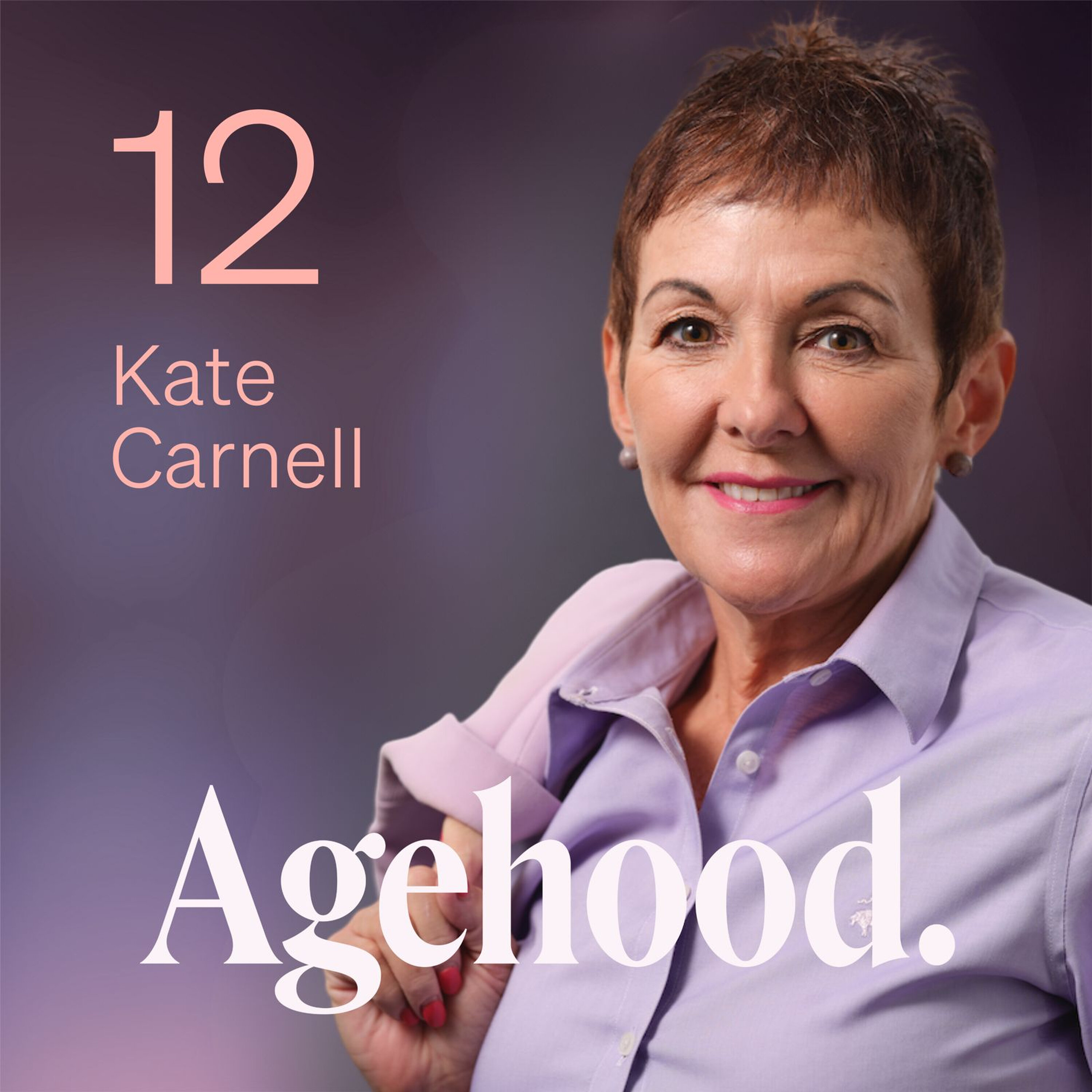
Kate Carnell: On what families need to know before it’s too late
Kate Carnell has seen ageing and end-of-life care from every angle – as a pharmacist, as Chief Minister of the ACT, as a founding voice of Beyond Blue, and now as chair of Violet, the organisation behind Agehood. But this conversation isn’t just about policy or health systems – it’s about families, choices, and the very human side of planning for the end of life.
In this episode, Kate shares why even the most capable families can find themselves unprepared, what she learned when her own parents reached their final chapter, and why the sandwich generation is under more pressure than ever. It’s a candid, practical, and compassionate look at what happens when love, logistics, and reality collide – and how we can do it better.
FIND OUT MORE
If you’re caring for aging parents, navigating your own next chapter, or just trying to keep all the balls in the air—you’re not alone. At Violet, we offer free tools and support to help families navigate the last stage of life with care and confidence. Visit violet.org.au to start the conversation.
CREDITS
Host: Melissa Reader
Guest: Kate Carnell
Executive Producer: Lize Ratliff
Find out more about Violet at violet.org.au
See omnystudio.com/listener for privacy information.
Transcript
Hi, I'm Melissa Reeder. Welcome to Agehood. It's the podcast for people who are quietly carrying it all. Aging parents, adult kids, work, life and their own next chapter. If this is sounding like you, well, you are in your agehood and it's time we talked about it. Kate Carnell has worn many hats, originally as a pharmacist, right through to chief Minister of the act, business ombudsman, mental health advocate and now chair of Violet, the organisation behind this very podcast. But what makes Kate's voice so compelling isn't just her impressive cv. It's the fact that she's really lived the complexity that we're here to talk about. From standing at the pharmacy counter helping families as they care for elderly loved ones or people who are unwell, to sitting around the kitchen table with her own ageing parents. Parents who were really clear about their wishes, but whose plan still came unstuck. Kate knows that end of life planning isn't just policy or medicine. It's relationships, timing, emotion, trust and often hard conversations that are left too late. On today's episode of Agehood, Kate joins me to talk about how important it is to get these conversations right and why she believes we need to shift the way we think about the final chapters of life. This episode of Agehood is brought to you by Wellways Carer Gateway. Being a carer can be rewarding, but it can also be overwhelming and isolating. At Wellways Carer Gateway, the team really understand the highs and the lows of caring, because many of them are carers themselves. Whether it's help navigating services, a break when you need it, or just someone to talk to, support is here. It's free, it's local and it's tailored to you. Call 1-800-422-737 or just search Wellways Carer Gateway to connect with your local team. A will is vital, but it's not designed to keep up with all of the personal, the practical and the financial details of our modern lives. Things like passwords, bank accounts and bills, they often go unrecorded. And while life is complicated, a legacy doesn't have to be. That's where a letter of wishes from today's sponsor, Bill Will, comes in. It's a simple and secure way to reduce stress for your loved ones, to share your values and preserve your voice. And it can save hundreds of hours of admin down the line. Visit billwhill.com to get started. Kate, welcome to Hhood.
Thank you very much for having me, Melissa.
We have lots of conversations, don't we? As chair and CEO of Violet, we talk pret regularly about a range of things, but I think today's conversation is a little different and I've really been looking forward to doing this with you.
Thank you very much.
You are the chair of Violet, the organisation behind this podcast, but you've had a really rich and varied career, from politics to Ombudsman's roles and a lot of things in between. Tell us a little bit about the things you've been involved in.
Well, Melissa, first and foremost, I'm a pharmacist, so I. I've been involved in health for a very long time and I owned my own pharmacies for a lot of years, 15 years or so. And one thing you learn in pharmacy is you get quite close to your customers, to your patients and see what they're going through. And that really changed my views on a whole range of things that I got involved with over time. Everything from drug law reform to what we're talking about today, end of life planning and care. Because the thing about pharmacy is you'll be dealing with, you know, with two customers, you know, two clients, Mum and Dad, they're getting older, then one of them can't come in anymore and then the daughter comes in and you see the whole process at the front line, right at the front line, right at, hi, Mrs. Jones, you know, how's, you know, whatever, how's your husband?
They've held relationships, they're people, you know.
And you can see them, you can see what happens when people get very frail and particularly when plans haven't been put in place to make that end of life approach the best it can be. So from then I went into politics and was Chief Minister of the act for a couple of terms. And I'm probably one of the very few people who ever gave themselves the health portfolio. But then I gave myself treasury as well so I could pay for it.
Helpful combination.
A helpful combination. That's fine. And so since then I was CEO of the General Practice Network, the divisions of General Practice and then Small Business Ombudsman, Small Business and Family Enterprise Ombudsman, which was about looking after smaller businesses, which is the majority of Australian businesses, and how they interface with our society and with our economy. And a lot of those family businesses, you know, are part of that succession planning. Again, coming back to the issue we're talking about today, how you deal with situations where, you know, Mum and Dad have run the business for a very long time, they're getting older, the Kids need, you know, there needs to be succession planning in the business and that means having discussions and having plans. So it's not just about death and dying, it's about that whole economic scenario.
Of planning properly through different chapters of life.
Through different chapters of life.
And you have also been quite instrumental in the formative years of Beyond Blue, Right through to, you know, it's, it's kind of development and state. Now. Tell me a little bit about that because, you know, we often point to mental health as a bit of a North Star for the work we're doing here, in that it had all the similar stigma rather not so long ago.
That's true. So I got involved with Beyond Blue right at the beginning of Beyond Blue, really, as I said, I was in politics. I was Minister for Health and also Chief Minister and having seen in pharmacy the huge issues that mental health produced in our society in a whole range of different areas, and I'm not going to go into them now, but for BeyondBlue, I was at the. The Premier's Conference Meeting, or COAG, as we called it, where Jeff Kennett got up at the end of the meeting and said, look, we've got to do something about mental health. Now. This was head of government meeting, not health ministers meeting. So they were all looking at him and saying, jeff's lost the plot this time. When was this?
What year was this, roughly?
This was back in probably 1999, I think it was while Jeff, while Jeff was still Premier. Yeah. Lost the election very soon after this. And what had happened is a couple of one of his daughter's friends had died as a result of suicide and she, his daughter, thought they were car accidents and said, dad, you've got to do something about road safety. Jeff asked for some work to be done on what had happened with these very impressive young men, he said, and it turned out to be suicide and mental health. Geoff then stood up in front of COAG and said, look, we just gotta do something here. He convinced John Howard at the time to put some money on the table as Premier of Victoria. He put, he matched and actually gave a bit more at that stage and then put pressure on others to put some money on the table. It was very small back in those days, but when Jeff lost the election, he went ahead and set up Beyond Blue. It was lucky Victoria kept the money on the table even after Jeff wasn't there. And Beyond Blue started in a very.
Small way to start with, but what.
We were trying to do is make it okay for people to talk about it. You know, you can't fix something, you can't talk about.
What's so interesting in that for me is the kind of misperception of the problem as being a road safety issue, when actually you deeply look at the problem and you realised it was an issue around mental health. And I think there's some parallels for us in this work as well, because last stage of life, end of life, has so commonly been seen as a medical issue. And what where learning and now very much committed to is, this is actually not about medicine. This is about people, relationships, conversations and planning. So, you know, I think there's a lot that we can learn from those formative years of Beyond Blue. And I know it wasn't easy getting that off the ground, but look at where that organization is today, the impact it's had and the support it has from the community.
Look, it's absolutely true. So most issues such as mental health are not about just about medicine. Obviously it is important to have psychologists, psychiatrists, the people who can medically support somebody. But a lot of it's about discussions about accepting people for who they are, being willing to ask, are you okay giving people support in the workplace, in families, when they are struggling, not doing well. So a lot of problems can be solved by having good solid discussions, good planning and accepting what people want and need.
So true. So tell me, when I came down to talk to you a couple of years back, we caught up in Canberra late one afternoon and I talked to you a little bit about this work and I asked you to please consider joining us. What was it that got you about Violet and this kind of, this area?
Well, as I said, I'd been a pharmacist. Well, I'm still a pharmacist really, but I'd been a pharmacist for a long time and I'd seen, you know, what happens to families when that end of life process, the last chapter of life, isn't handled well. But then I thought I knew everything, you see, because I'd been Minister for Health, I'd done inquiries for the federal government, a couple of them into aged care. It's a complex area, but hey, I knew what federal governments did and state governments did and what the private sector did. I understood all that to Mum and Dad, and Mum and Dad were, you know, dad ran his own businesses for lots of years. They were capable people. They'd made it really clear that they didn't want to be saved, if you know what I mean, that they, they had the Philip Nitschke book On the shelf talking about, you know, if. If they ended up needing significant support, if they end up but ended up not being able to look after themselves. They wanted to be allowed to die.
So they accepted their age and their increasing frailty and they were quite open to what that.
So those discussions had. I call them the what discussion. So they didn't want to end up in a fetal position in an aged care place. They didn't want to be saved if their quality of life was significantly impacted upon. So we knew all that. We, Mum and Dad had built a very nice granny flat. It was probably a bit better than that. In the backyard of the old family home. We had railings, we had, you know, wheelchair access. We were planned to within an inch of our lives. But what we didn't really plan for and hadn't had the discussions about was how we were going to achieve what Mum and Dad wanted and that was to die in their own home.
And you mean how you were going to do that as a family, as a group of people?
Well, how we were going to do it as a. Yeah, as a family, but also the actual nuts and bolts of this. Yeah, Mum had had help. We started the process of help coming in for, you know, basic things like house cleaning, you know, all of those things. And Mum was really, really hated it because we were using some of the bigger operators and they sent different people.
And it's hard, isn't it? So hard for people when they have different people coming in and out. It's hard to avoid also, but it's hard for people to accept.
Well, Mum just hated having different people that she didn't know in her house. So she said, I'm not having different people in my house anymore.
Can that, can that.
How often do you hear the same thing from people saying, yep, that's exactly what my mother said. It's exactly what my father said. So what we didn't do then is have sensible discussions about, okay, Mum, get that, but you know, you are going to fall. You know, mum's 90 at this stage. She's quite frail. Dad's looking after Mum. She was going to fall. And guess what she did? She did broke a hip, ends up in hospital. She's too frail for a hip replacement, so they pin it for pain purposes. Dad can no longer lift Mum. Now what do we do? Mum said she doesn't want people in the house. We haven't really, you know, come up with a plan on how to get around that. I found a really nice residential aged care facility, you know. Cause I knew the space, it was lovely. It looked a little bit like a resort. Mum could. I got Mum and Dad in together, which is a challenge. I thought, okay, we've got this nailed. They hated it. They were depressed. Dad didn't have a job anymore because he couldn't look after Mum. They died within 28 days of each other.
Oh, gosh.
I mean, it was horrible. Horrible. They didn't deserve that. They deserved better than that. But it was really because we hadn't. We had planned what, you know, railings, you know, that sort of stuff.
The kind of practical, tactical stuff, but not how.
So the inevitable nature of Mum falling, you know, and ending up in a situation where dad couldn't lift Mum so couldn't take her to the loo and all those things, how we were actually going to deliver on what we knew they wanted was, was a really big. Well, not surprise really, but, you know, big, you know, a failure from my behalf because we hadn't done that.
That's so hard, Kate. And I guess, you know, for you in your political roles and your leadership roles, knowing the system is one thing. Living the system as that classic sandwich generation scenario, it's really different.
It's really different. And you know, really having in depth discussions as a family. And that's the other bit. I only got one brother, so it's not like we're thousands of us.
Are you the eldest?
I'm the eldest.
So you're the eldest daughter.
The classic.
Yes. The classic eldest daughter, yes.
And my brother lives in the house, in the old family house at the front. But, you know, they're working and, you know, whatever the fact is, we hadn't sat down and said, okay, how are we going to give Mum and Dad what we know they want? Understanding what was going to happen. Mum was going to fall. Dad wasn't going to be able to actually physically look after Mum anymore. I think if we'd said to them, look, you are going to need 24 hour care and we could have managed that in the facility, you know, where. But that means you're going to have to have people in your house and you're going to have to have them, you know, available 24, 7 or residential aged care. Those are the choices here. I think they would have chosen residential aged care, at which stage it would have been their choice, at which stage I think, you know, the level of depression and other things wouldn't have been there. But mind you, they might have chosen to stay at home, at which stage it was their choice to have the care the problem was the decision making ended up being not with them. And I think that's the issue we find all the time.
Yeah.
You know, people having to make decision in hospital corridors because mum's fallen, Dad's fallen, something's happened.
We haven't talked about this, we haven't planned for it as a family and here we are and we've got to make some fast decisions. When you think back about that time, do you sense that you knew that that was a conversation that you needed to have or did it just. Was it just not part? Were you just kind of getting through day to day?
Oh, look back, you know, Mum's in hospital, she's not real well. Dad's pretty distressed as you could imagine. It wasn't a good time to have, you know, an in depth discussion. The only discussion we could have is, okay, Mum can't come home, what do we do? What do we do? And dad said, I can look after her, but dad couldn't look after her. And, you know, so in those sort of situations, it's a really bad time to have rational discussions.
Technically impossible.
You've got to have them earlier. Yeah. And that's what Violet's about.
Absolutely. Given all of your professional work and that very, you know, difficult personal experience, why do you think this is so hard for people?
I think unfortunately, in our society, talking about death and dying is really difficult. You know, how often do you hear, oh, such and such passed on? Well, they actually just died, really. And so talking about death, even though it happens to everybody, which is, you know, we're all going to die. We all have I spec views on how we would like to die. We all have, you know, sort of very unrealistic views, like, I'll say, I just like to be run over by a bus. You know, here one minute, gone the next.
Not off in my sleep, not off in my sleep.
I was thinking run over by bus is bad because the poor bus driver.
That sounds a little traumatic. It does, yes. But I think you mean quick I.
Here one minute, gone the next. But that's not terribly likely.
No. For most people, for 60 or 70% of us, that's not going to be the case.
So the thought that we could be here one minute, gone the next is very, very unlikely and sometimes not the best outcome. Because that process of dying, where you can have discussions with your family, with your friends, you can, you know, you can be, you can do a whole range of things that you may not have done otherwise, particularly with your very close family.
Yeah. And the grief process for your family.
Yeah, you can handle much better if you can. If it's not here one minute gone, gone the next.
Coming up, Kate, on why early conversations about care really matter and how you can make that happen. Agehood is brought to you by Wellways Carer Gateway. Caring for a loved one can be hard, but you don't have to do it alone. Wellways Carer Gateway provide free tailored support for carers. Call 1-800-422-2737 or simply search Wellways Carer Gateway to start your Carer Gateway journey. We do so much for so many other life stages, don't we? And I, you know, I'm not naively ignoring the fact that when people are pregnant and have babies, there's a beautiful baby that is the result of the plan. But we do lean into so many life stages. We know how to talk about them. We can support each other and we can access services, but this whole chapter of life is just, it's just a void.
Well, the problem is it becomes medicalized. So what happens is it's about, it's about medicine, it's about you hope. You know, palliative care is fantastic, but generally people don't even access palliative care until the last days of life or when it's really about pain relief, keeping a patient or a person comfortable rather than, you know, the whole issue of dying over a period of time. So we medicalize it, we make it about doctors, not about families, not about discussions, not about planning, all the things that you would normally do for a stage of life.
So much work to do, particularly when we think about this in the context of an aging population. And we've talked a lot about this on this podcast, but we have a five fold increase in the number of people reaching 85 by 2031. So, you know, Kate, we've been flooded with submissions from the sandwich generation in a recent campaign talking about how complex this is for people that most people don't even know where to start. And yet we're only at the very beginning of that demographic shift. So, you know, it's worrying what this could look like in four, five, six years time.
Well, Melissa, you know, having been around health for a long time, the fact that 25% of beds in our public hospital system are taken up by people in the final stage of life. And that's really people like my mum back in the day with nowhere for them to go, you know, and getting treatment that is not useful. I mean, they're dying, they're going to die.
And that's not the place for them to be in those last stages of life. That's not where they want to be, not where their families want them to be.
Look, hospitals are there to treat people, to make them better. They're not there as a comfortable, quiet, embracing sort of an environment where for people to have their final parts of their life. And you know, we're not talking necessarily about days. You know, we know that people are in hospital, you know, for regular admissions to hospital for very quite long periods of time in that final 12 months of life.
33 days, isn't it? On average over four episodes. That's a lot of time when time is the most precious thing and that's the average.
There's lots that are there for lots longer and you know, these are taking up hospital beds that are desperately needed to treat people and make people better. We hear about ambulance ramping and whatever. This is not to suggest we want to throw people in final stage of life out, but we want them to be where it's best for them and their families. And that means we've got to have discussions and plan it before they end up in a hospital bed with no plans, no residential aged care, no capacity to go home or to another family member or whatever it is that that family actually wants, which is just that.
Constant story of doing too little, too late. I think that's exactly what we're trying to address.
It's also true, Meliss, when you talk about the sandwich generation, that's changed dramatically. You know, now 58 year old women, which is the average in this space, are still in the workforce.
I wanted to ask you about this because this is, this is really silent, isn't it? And it's huge. Let's talk about that average 58 year old woman. What is she grappling with and managing well day to day?
Well, what's changed dramatically is back in my mum's generation, they weren't at work. They might work a bit, but mostly they weren't at work. Mostly people died lots sooner. So parents didn't live till 90, 91 like my parents did and mostly kids had left. Now increasingly the 58 year old woman is in the workforce working full time and we need her to for productivity purposes.
Well, yes, absolutely.
In society we need those women, well educated women in the workforce needing to continue to work for, you know, for their retirement, but also for our community more broadly or for our economy more broadly. She's potentially got kids still at home because they can't afford to buy a house. Yet so they're living at home to save on rent and all those things that we hear about all the time and have got elderly parents that are alive potentially living in their own homes, becoming frailer. So trying to balance all of those things while working full time is incredibly difficult. And I'd have to say I made the point earlier that I understood the aged care system. The aged care system is an absolute nightmare to navigate. It's really complex. So for people who've never interfaced with it before it's, you know, it's really, really hard. I always despair for people who English may not be their first language and may not understand the Australian health system or legal system.
And they're doing this at a point in time where there's huge stress, you know, something's happened to trigger that entry to residential care. So it's a period of huge stress. The thing that's really on my mind when you look at occupancy in residential care, you know, it's quite hard to get a bed today again, what is that going to look like in five years time and what does that mean again for that 58 year old woman who, you know, you assume whose parents or in laws would want to be home, would want to age in place for as long as they can and it's very hard to access services and support in a time and that 58 year old woman is juggling everything then in a much more acute way.
Look, it's really hard, especially if you actually don't understand the system, don't even know where to go for help or support because there is home based care there. You know, you've got to have an assessment to determine what level of care and then you've got to access various other services. You know, it is actually quite complex even to access the services that exist and even know they exist. And you know, that's a problem with the system as we've got it today. Where do you go to to actually even know what, you know, what questions to ask, how to have that conversation with mum, what services are actually available, you know, in other words, where do I start?
Where do I start? And that's the question we've just heard over and over and over again from thousands of people, isn't it? In the last couple of years you've just done a beautiful segue for me there, thank you. Into what does this look like? If it's done better and I'm not pretending, we can wave a magic wand and make this stage of life easy because it's not. It's a, a difficult, challenging stage of life. There's a lot of emotion, there's a lot of anticipatory grief and, you know, sometimes that family stuff, those emotional dynamics, they all come up right in when things get messy. But if we thought about the things that need to be talked about and in place for this stage of life to be done better. I'd love to work out a bit of a checklist with you.
Look, I think a checklist is really important, but look, the first thing on a checklist is to talk to mum or dad or whoever it is that is at the final, in their final chapter of life about what they want, you know, secondarily what the family wants and can do.
Yeah.
What's possible for the family. So I suppose we could say identify what truly matters to the person who is in that final chapter, but also what really matters for the family. And that will differ quite significantly depending.
On whole range of things.
The whole range of things.
And everybody knows that you know those elements.
So you've got to have the conversation. Not in a hospital corridor. Yeah, yeah.
Catherine Mannix, who does a lot of work with us, often talks about that conversation needing to be an invitation, which might mean that you actually have to make that invitation quite a few times before that person feels ready. But if that feels like a demand, it's hard for people. So I think, you know, there's a lot of resources and advice that we've put together@violet.org au about these conversations for anyone listening that might want to look at those. But the thing that's really stuck with me is this idea of an invitation. What about decision making? You know, because we need to understand how we want to share health information, how we want to make decisions and also if we are not able to make decisions for ourselves, who would do that on our behalf? Who would speak for us?
Well, one of the important things I think for Violet in this space is to become a source of truth a bit, as I'm sure we will talk about. But Violet has great information on the website with the capacity to ask questions at 11 o' clock at night, which is probably when you need to ask.
Those questions, when you can catch a breath.
But we've also got Violet guides and Violet guides are people who have been there, they've been through losing a loved one, they're very well trained by us at Violet on how to have those conversations, but also on how to support somebody through that decision making process. Because family dynamics are difficult. Look, let's be Fair. And where things go really wrong, as we know from our absolutely wonderful board and clinical advisory group, who are often doctors in accident emergency, in intensive care. So the great dilemma is, you know, one member of the family says, yes, Mum doesn't want, you know, the life support system on, she wants it off, she's made it clear. And another member of the family says, no, no, no, no, you can't do that.
So they might have just flown in from another state and maybe not seen mum for two years and might not be at the same point of acceptance.
You know, making sure you've navigated those family dynamics early, not when you're in hospital. In hospital is, is pretty fundamental, isn't it?
Yeah, it is. And I. The guides are so, so good in that space. As you said, they've all got lived experience. They're incredibly well trained and supported to deliver those support programs for people that are caring for loved ones, but also for people through grief and loss and bereavement. And there's no finite line around that. Anticipatory grief can start quite early from a diagnosis or perhaps from a fall. So yeah, they really are there to support people through the whole spectrum. And anybody interested in looking at that support program can have a look@violet.org au the other thing that is incredibly helpful for people you've just referenced it is what we call Ask Violet and it's a digital companion that we've developed, drawing on all the wisdom and data and learnings of working with a Violet guide. So you can now talk with Violet at 11 or 12 o' clock at night and she can talk to you in any language. So I would really encourage everybody to jump on and have a look at that. She's very, very well trained and may just have the answers and the support that you're looking for in the time frame that you need it. Let's go back to the checklist because this is also one of the products that we're providing through Violet. We call it the Violet Plan. It's a series of reflections that helps you develop things like a care compass for your loved ones, future care and well being. And it also starts to assist you with financial, legal and life matters, memory and legacy and a range of other things. But let's stay in the space of kind of care at the moment. We've talked a little bit about that decision making and planning for us. Uncertainty. But there are also some really key decisions here around the type of care people want and the type of care they don't want.
And being really clear about that and making sure families are really clear about that. You know, the example I gave before of one member of the family saying, I know Mum doesn't want to be on that life support system, and another one saying, no, no, no, it's really bad. You can't pull the plug. That's a. At an extreme end of this, but that happens all the time. So making sure that families are understanding and have had the discussions about if this happens, what's the outcome. And remember, the hard bit about this is you don't know what day you're going to die or what day mum's going to die or even what month mom's going to die. So this. There is a huge amount of uncertainty. So a lot of planning is about saying, okay, we're going to have a baby and this is the date, or within a week or two, it's going to happen. In this case, you can't. So it could be a year, it could be months, it could be years, you know, it could be a number of years. You just don't know, but you know it's going to happen. So I think the important bit is just to be really, really honest in those discussions, to say, look, Mum, we're all going to die. You're going to more than likely die before me because you're older, you're getting frailer. Let's have that discussion about what that's going to look like. Not about, oh, mom, you're going to die. No, it's about we all are. And we should have those discussions before we get to the final stage of your life. Well before.
Well before again, that's something we're really continuing to advocate for. There's a lot of relief, actually. I think, you know, people are very apprehensive sometimes about having these discussions or making somebody upset or uncomfortable and, you know, acknowledge that they're not easy to open. But. But done and done well and respectfully. There's often so much relief, isn't there, that finally things are out in the open. We've said some important words to each other. It may be a conversation that we have to return to. No doubt we will.
And often the reality is it doesn't happen in one conversation.
Yeah, things change. Things change, but we know how to do it now. We've had a bit of practice. It's something we can return to. What about this idea of sad men? You know, all of that administration that is so time and cost heavy, but also heartache heavy. All the financial and legal stuff and the Life admin lists that seem to go on forever. You know, I don't think there's an easy fix to that. But again, when you look at the fact that only 11% of people have a power of attorney and I. Only 40% of people have a will, there's so much that we could do in that space to make things easier as well.
Look, absolutely, in fact, huge amounts. So having a power of attorney, everyone should have one, because you don't know what will happen in life, really. You know, you could have a car accident and not be competent. One of the saddest things at the moment is, you know, the levels of dementia are going up, up quite significantly. And the problem is it isn't legally possible to have a power of attorney when somebody doesn't have the capacity to make the call. So you can't get somebody with significant dementia, Alzheimer's, whatever, to actually sign a power of attorney because the lawyer, stroke doctor, both of them need to be able to say, this person knows what they're signing and, and that. So putting it off for a long time often means you get to a point where you can't do it anymore. It's not possible. So power of attorneys are really important, obviously, wills are really important. And obviously it's really important to update your will as your life situation changes, as your kids get older, as things happen, you should, we all should do that. But importantly, things like, where are all of those documents that your loved ones are going to need when you die? And so just as simple as everyone's.
Got a dusty top drawer, haven't they? Or a box at the back of the wardrobe. What if it's only one box in something as opposed to just, you know, randomly set through the house? But, but yeah, we have to do that better. And I think there are so many ways that these two things can come together because we're talking about key people in our lives and our families that we hope will, you know, accompany their loved ones, their parents, their partners will help make decisions together, whether that's around health or care or legal or financial matters. So they're all part of the same conversation around planning for the this life.
Stage and being able to ask, to know the things you've got to ask for. Like a whole range of people are going to ask you for the death certificate, so make sure you ask for one. You know, I mean, there's stuff that you don't even think about. And that's again, where some of the planning that Violet can help you with can mean when it happens and remember it's going to happen to everyone when that loved one dies, you know, well, I need this, this, this and this. I need to know where they are and I need to be, you know, to know the things that I need to do like closing down bank accounts or.
It also means that all of those processes with banks or super funds or insurance companies are so much easier because you've got the documents you need. There's just a lot less distress and less disorganization. I don't know if you found this, Kate, but I remember after Mara's death I had to put that death certificate on the counter in front of so many strangers and just watch their face, like watch their reaction. And it was awful. It felt so disrespectful to him. It just felt horrible all around. So one of the things that we are really trying to do is collect those documents and keep them safely, securely on the cloud for you so they can go to your insurer or your bank or wherever they need to go and you don't have to have that very painful experience.
And of course, Violet has also helped with training people who deal with this, you know, at the banks, at the residential aged care, you know, we'd like more of those entities to train their staff, but it's really important to have staff that understand the trauma.
It's hard for them too. It's hard for those staff as well. They, they are not equipped with the skills to talk about this. They can sense the pain in the conversation but they don't always have the skills and they don't have the, the third party partners to point those customers.
We can help train them.
Absolutely, absolutely. Kate, that's been brilliant. I think we've covered, covered a lot. But I want to ask you one, one last thing. Thinking about that 58 year old woman, that sandwich generation woman, what are some words of wisdom?
Look, I think the real. Well, for me the most important issue is to be realistic. You know, Mum and dad are going to die, they're going to become less able to look after themselves and what does that look like? And how do we have the conversations now with them and with the family more broadly to ensure that that final stage, that final chapter of life is the one they choose and that you as a family are able to support. I mean, sometimes people want things that are not possible, but often they are possible if you have the time and the capacity to have those discussions. And Violet can really help with what those questions are, what things you need to think about and to, I have to say, take that weight off your shoulder of not knowing where to start.
Feeling alone and feeling so overwhelmed.
And yet there is a huge number of Australians right now, often women, mostly women, but not always women who are in exactly that space, feeling like the weight of the world's on their shoulders. They've got balls in the air. Mum, dad, kids, job, you know, at the moment, financial pressure, cost of living, all sorts of things, and feeling like they're just being pushed into the ground because, you know, too much weight on their shoulders. Hopefully Violet can help take some of that weight off.
Fantastic. Kate Carnell, thank you. This organisation would not be what it is without your incredible support. Support for me, support for the organisation and everything we do and your commitment. And thank you for taking the time for this chat.
It's an absolute pleasure, Melissa.
Thank you. Here at Violet, we believe that the last stage of life deserves the same care, planning and attention as every other life milestone. That's why we offer free support, guidance and tools for families, so that no one has to face this chapter of life feeling unprepared or unsupported. If you'd like help making a plan, starting an important conversation or simply feeling less overwhelmed, head to violet.org au to learn more. And if this episode helped you, please share it with someone who needs to hear it too. We'd love you to follow Agehood and leave us a review. This episode of Agehood was brought to you by Wellways Carer Gateway. As a carer, prioritising yourself and your own wellbeing can be hard. That's why Wellways Carer Gateway is making it easier. With Walk in Carer Hubs, simple online registration and Wanda, a mobile service bringing support to carers in their own community Communities help is now more accessible than ever. Whether you're looking for practical advice, emotional support or some help navigating other support systems, Wellways Carer Gateway can help. Call 1-800-422-2737 or search Wellways Carer Gateway. Today's episode of Agehood was brought to you by Bill William Wills aren't designed to cover the full picture, especially when it comes to personal, practical and financial details. A letter of wishes from Bill Will really helps to fill that gap. From passwords and accounts to everyday instructions, it can save hundreds of hours of admin for the people that you care about most, reduce stress, share your values and preserve your voice@billwill.com au.