
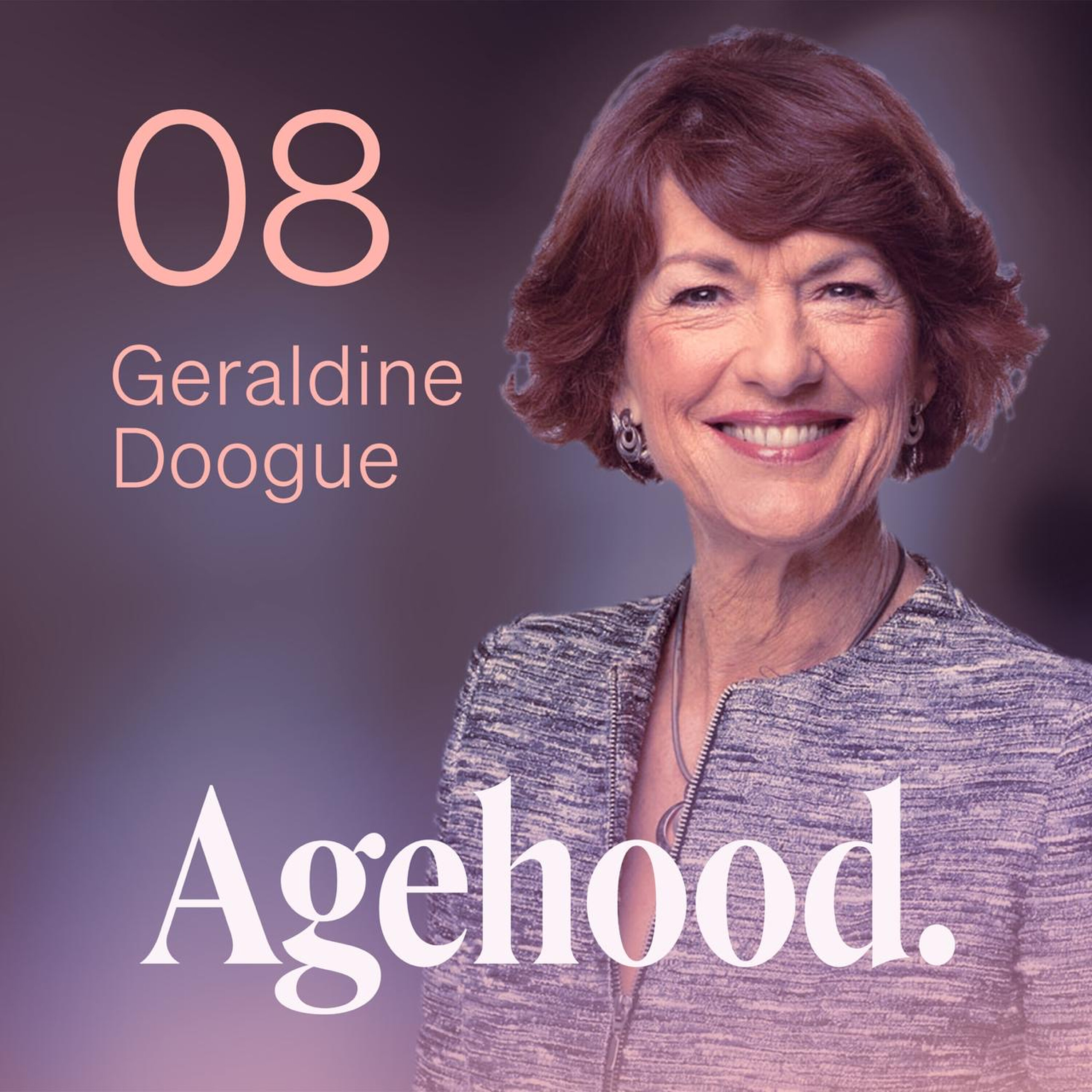
Geraldine Doogue: On the lessons her husband's death left behind
Geraldine Doogue is one of Australia’s most respected journalists and broadcasters. And in this episode, Geraldine reflects on losing her husband, Ian Carroll, in 2011 — and the reality of walking beside someone you love through their final chapter. She talks openly about the moments of courage, the guilt that lingers, the memories that endure, and the relief of honouring Ian’s wish to die in hospital, not at home.
This is a conversation about love, loss, and the gift of presence. It’s also a reminder that the best death isn’t about where it happens — it’s about giving someone the dignity to choose.
FIND OUT MORE
If you’re caring for aging parents, navigating your own next chapter, or just trying to keep all the balls in the air—you’re not alone. At Violet, we offer free tools and support to help families navigate the last stage of life with care and confidence. Visit violet.org.au to start the conversation.
CREDITS
Host: Melissa Reader
Guest: Geraldine Doogue
Executive Producer: Lize Ratliff
Find out more about Violet at violet.org.au
Agehood is the podcast that finally says what we're all thinking but rarely saying out loud. Hosted by Melissa Reader, CEO of Violet, we have the conversations that matter most: watching our parents age, being everyone's go-to person, the mess of love and duty, what it really takes to care for those we love, and yes, death, dying, and loss.
You'll hear Australia's most trusted voices, from beloved broadcasters to respected experts, vulnerably sharing their own stories alongside practical guidance that actually helps. This isn't about having all the answers—it's about asking the right questions and knowing you're not alone.
See omnystudio.com/listener for privacy information.
Transcript
Foreign.
I'm Melissa Reeder. Welcome to Agehood, the podcast for people who are quietly carrying it all. Aging parents, adult kids, work, life, love and their own next chapter. If it's sounding like you, well, you're in your age hood and it's time we talked about it. Geraldine Duke has spent decades shaping the national conversation as a trailblazing journalist, a broadcaster and the voice behind programs like Compass, Life Matters and Saturday Extra. She's interviewed prime ministers, faith leaders, cultural change makers, always with her brand of warmth, insight and real humanity. But this conversation is one that she really has. In this deeply personal episode, Geraldine reflects on the death of her husband, Ian Carroll, and the quiet, complicated year that.
Led up to it.
She speaks with such extraordinary candour about what it's really like to walk alongside someone that you love as they approach the end of life. The moments of courage, the unfinished conversations, the guilt that lingers and the memories.
That refuse to fade.
Together.
We talk about the pressure to get it right, the myth of the perfect goodbye, and why sometimes the most powerful thing that you can offer is simply to be there. This is a conversation about love, loss, legacy, and how we begin to find our way forward. Today's episode of Agehood has been brought to you by Wellways Carer Gateway. Wellways deliver free Carer Gateway services across Queensland and also across parts of New South Wales. They're designed by carers for carers, and the services really focus on building skills, easing stress and helping you to stay strong in your caring role. Because when you look after yourself, you're in a better place to care for the people who need you. Call 1-800-422-737 or search Wellways Carer Gateway to connect with your local team. A will is vital, but it's not designed to keep up with all of the personal, the practical and the financial details of our modern lives. Things like passwords, bank accounts and bills often go unrecorded. And while life is complicated, a legacy doesn't have to be. That's where a letter of wishes from today's sponsor, Billwill, comes in. It's a simple and secure way to reduce stress for your loved ones, to share your values and preserve your voice. And it can save hundreds of hours of admin down the line. Visit billwhill.com to get started.
Geraldine Duke, welcome to Agehood. It is such a pleasure to have you on the show today. Can we start by talking a little bit about your husband, Ian? What kind of man was he? What were the things that you really valued Most in your relationship.
Oh, Ian was very special. He was a rare gem. As I put on his funeral, you know, his details. Look, he was a man. He was my second husband. I had been married first and I met Ian. He was a producer at the abc and I met, fell in love with the producer. You know, it sounds very cliched, but we did fall very much in love with each other. And you know, that was all very difficult because we were both married and both had children. And look, he was a very big thinking man. He was a Melbourne man. He'd been a journalist. Started at the age we shared an enormous journalistic interest. He was a thrilling producer. I still think he's the best producer I've ever worked with. And a lot of people say that he was a very, very good constructive talent spotter, program creator at the abc. And look, we had a very big, not a perfect relationship. Like I mean, you know, you go your ups and downs in your relationship. We were married in 1987, but it was a big, an exciting relationship and I think a real meeting of minds and hearts. And he basically got pancreatic cancer. He hadn't been, he'd been sluggish. I suppose I'd say that, you know, on walks like we now know, they think with pancreatic that it's actually a very slow developing cancer, not a fast developing cancer. It presents itself at the end as fast developing, but it's actually a slow developing. And when I look back, you know, I, I sort of could see him. There were issues, if I can put it like that, because he'd been a very, he was, he was overweight, he was always carrying weight, poor in, but very interested in fitness. And you know, we'd go out on a walk and then he'd suddenly say, I've just lost my impetus and I've got, I'll have to turn back. I said, why sort of thing. Now I personally believe that this cancer was growing for quite a long time. And I think he had a lot of stress at work as well because he was very creative, changing things. And then he basically got diagnosed in 20, in 2011. He died 2010. He had that big Whipple's operation, the 10 hours you know, of operation. And he died a year to the day after that operation. Now I consider that we got six months that I didn't imagine we'd get. It's actually quite a while for pancreatic. It's a shocking illness to be candid. He faced it from the start. He didn't like it. But he was a very much a person who faced things, took things on, and he died in August 19, 2011, which is a day see it into my memory.
And it's interesting that you say you saw some signs of change or him not quite being himself in the lead up to that diagnosis. That was definitely my experience too. How did that diagnosis play out? How did you. What was the process to get to that diagnosis and how did you process it?
Well, he had gone in again, looking back, you know, you reconstruct these things after you get over the incredible shock and just, you know, the turmoil that follows a cancer diagnosis. He went in to have a stomach ban put in. He was so trying so hard to lose weight. And they discovered while doing that a blockage in the bile duct. Now, he said right from the start to me, and it was typically Ian, very, very intelligent man. He said, when. So they went in to look for what was that blockage? And of course they found this cancer. Now he said subsequently, he said they knew what they were find, they knew it. And I said, oh, no, I don't know whether they did. No, he said they did. And I now think they did. I have now subsequently read quite a few accounts of this issue of bile duct blockages discovered in a range of ways, not necessarily through, you know, a stomach band. So I think bile duct blockages are pretty. My instinct is, I'm not a medical person, but I've got a lot of medical friends. I think it's a, it's a, it's quite a sign that something is happening. And, you know, as they explained, the pancreas is like the terminus of the body. You know, everything goes out. They're all the vital sort of roads go out from the pancreas. Look, he, Norman Swan, you know, who's an absolute stalwart of Radio national, he instantly found Ian, you know, who he thought was a very good oncologist and surgeon. Then he found him a trial to go on because the, at that time the main drug, gemcitabine, had frankly a very. It wasn't a great success rate at all. And Norman found him this other much tougher drug called. A drug called abraxane, which is very early on in its take up. In fact, the oncologist didn't want him to go on. It said it's too tough, it hasn't been properly proven. And Ian said, what have I got to lose? So we went on this drug. It was a very tough drug, but it gave him six months. So I. And I think now I'M right that Abraxane has now been. Is much more used because it's very effective in many ways. But look, the success rates of pancreatic are still. They're getting better. I follow the research, but they're still bad.
When you look back on that last year, Geraldine, from Ian's diagnosis through to his death, were there things that you were consciously doing together? You know, were there conversations or experiences or practical things that you were doing together through that time within. With intent, I guess.
With intent. A good, good question. We did go on holiday and I might get upset now because I don't. It. We went and I just feel it was his great gesture to. We went on holiday to Penang and it was a wonderful holiday. And I think he must have pushed himself something shocking to do that I wanted to go on holiday. We had and I was interested in Malaysia and we went and I really do believe it was a massive gesture by him. I think it was probably the last. He was terribly interested in travel, I might add. It wasn't as if it was an ordeal. He was a wonderful traveler. Ian observed everything, commented, took everything in. You know, it was marvelous traveling with Ian. But I. And I always said I'd go back, but I haven't been able to go back. It's too much. I can't. You know, Georgetown, if anybody's been there, is, you know, one of the gorgeous spots of Asia, which is the capital of Penang, a marvelous old sort of colonial town that they've some fabulous Peranakan food and, you know, there's a beach. It's like a warm bath, that beach. But, you know, it's really a gorgeous place. But I simply can't go back. It'll be interesting. I may go back on the 20th anniversary. I've thought about this at seven years away, six to seven years away, but I can't yet. And look, no, I think he. Ian, he really tried, I think, to make some peak experiences, like lovely dinners and things. But look that. And he did keep working for quite a while. You know, he really. He. And I think he thought. Because initially the Abraxane did take it back and you know, I think, poor man, he. He might have thought he had a second chance, but he didn't because the cells had gone up into the. The main nerve. I've forgotten what you call that nerve going. I've gotten what you call it. But. Which made the. The cells travel. But he. And looking back, the surgeon, after the end of the operation, which is a pretty brutal operation that whipples he said, I've given him a fighting chance. Now, at the time, I was ecstatic because I thought I chose to hear, it's okay. And isn't it? When I look back at it, it wasn't. He said, I've given him a fighting chance. And, you know, he. Well, he had a chance, but, you know, not the chance. So Ian worked up, really, until two weeks before he died. And there was tremendous. You know, it was a huge funeral. It's a tremendous amount of outpouring. He was a highly respected man at the abc and he'd given so many people their start. It was his real gift that he could pick talent and one after the other. I mean, it was amazing. And people even recently said to me, you know, ian gave me my first big chance, you know, well, that's lovely. You know, that's lovely. For his. For me.
Beautiful children. Yeah.
For the grandchildren, they take it in now. Somebody said it to me in front of my granddaughter the other day, and she said, what does that mean now? So look, he. I think Ian, I said to somebody the other day, he died very well, if I can put it like that. I was very proud of him. It wasn't always easy, don't get me wrong. Not at all. But there was something courageous in that last six months. That is a wonderful thing to take with you. Yeah.
Oh, gosh, yeah. Were you, as a couple, were you able to talk about what was happening with a level of honesty? Were they conversations that you could both have?
No, we didn't really. Not really, when I think about it. Once he said to me, you know, Ian was. You didn't dwell upon things with Ian once he stated, you know, because he was given the information very crudely and brutally by a man who was not an oncologist. He'd gone for a scan. I'm trying to remember what you call him, you know, almost like a gastrologist sort of thing. That's not right. Gastroenterologist, I'm trying to say. And I think it was very harsh and tough. He basically said to Ian, go home and fix up your affairs.
That old line.
Yep.
We could do without that in medicine, couldn't we? There's a better way to express that sentiment. Yeah, absolutely.
I'm still outraged by it.
But.
I will say this, that Ian, I think it delivered. He was a very much a realist. It absolutely delivered to him. He took it in and I didn't believe it for a moment. No, I didn't. But looking back, you know, we were told very early on. And, you know, this man knew the stats. Now, he didn't know. What really annoyed me was that this man was not a specialist in pancreatic cancer. As a matter of fact, he was a specialist in reading, you know, you know, what am I trying to say? Surveys, like, you know, investigations. But he obviously saw what was there and. Yeah, that's what he told Ian. But no, once he told me that and I said, well, look, look, no, come on, we'll go ahead. We didn't talk about it a lot. No, we didn't.
Yeah. It's a tough conversation to have. I'm interested. It doesn't sound like that news was delivered in a particularly sensitive way to Ian, but what you've explained is that you felt like he got a sense of, I guess, the reality of his health. What did you see change in him? Was there any differences in Ian after that conversation?
No, because later there were, because, you know, you plunged into, what do you do now? And then you get onto that roller coaster of finding the oncologist and, you know, working out how you get into the hospital, blah, blah, blah. What I saw after that in the aftermath, oh, I think it was devastating. And he became. That wasn't an easy period. He, you know, I think that, you know, one's life, the healthy people's lives go on and you have children. We had a baby together, you know, who took quite a lot of getting. And so he was only young. Oh, well, he wasn't. Sorry, he wasn't young. He turned 18, just not long after Ian died, which was a very, very tough time. But, I mean, he was needy. He was in year 12. And then the other, the older one, my daughter was 27, she was 10 years older. And then his children were five and seven years older. He had two children after that. He. Look, I think we possibly did not. I do have a bit of guilt over some of these things, but look, you have to learn to forgive yourself as well. I think that I, like. I think he probably wanted more of just sitting down and being with him, but it was like you just. There was no. Often there was no conversation. There was nothing you could do. It's hard. It's hard.
It's so hard. We often talk about this idea of, you know, less hoovering, more hand holding, but it's actually a coping mechanism too, isn't it? Because you're just dealing with an absolute roller coaster of emotions and grief every day through that period. It's. It's incredibly tough. I wonder, are there things, when you look back that you wish you had known or been better prepared for.
Wow, gee. No, because I was surrounded with very high quality medical information. You know, I've got my. One of my closest friends is a very senior thoracic physician, and she was utterly fastidious in giving me information. But I'll come back to that because there's something important in that. And like Norman Swan just peppering me, you know, with information and so on. So I actually felt I was extremely well informed, and I do think that mattered. And. And look, I just copped it to that extent. I. And because he did go back to work, I did allow myself to believe that maybe this Abraxane was a miracle drug. But there was one terrible moment, which is right into 11 months in, I'd say, when this same thoracic physician friend, I was chatting away and I said, oh, Ian's been getting a bit of cause. You know, he had a personal trainer used to come to keep him healthy. You know, he cared about all that. And I said to my friend, oh, you know, he's getting a bit of pain in the shoulder. It's interesting, you know, he hasn't before. And she said, I do remember this. And she made a remark. She said something the equivalent of. There can be a classic secondaries which displays itself in the bone. And I just knew it. I just knew it. My heart half stopped, you know, my stomach dropped and I thought, oh, shit, this is it. And it was. I hadn't had that through the entire time and I suddenly knew it was the end or it wasn't going away. Now, that was a month.
So.
Look, all in all, though, I consider I was extremely fortunate, you know, to have 11 months of not living with that to that extent, of utter knowledge. So maybe I reach for that, you know, I'm.
I think we all. Fortunately, we reach for the things that get us through tough times. And I can imagine, particularly, it sounds like work was such an important anchor for Ian. And if he was working right up until the last few weeks before he died, that would have given you a real sense of normality.
It did. It did. That's exactly right. We had a normal. In the early part of the Abraxane. No, there was nothing normal about it. And I remember my stepdaughter, who adored her father, came. She said, I'll sit with dad. And she sat with him a few days. She said, I can't do it during. I said, I know, I understand, Jen. I understand. It's hard for people who are healthy. It's truly Difficult to accompany. And so there were times, and I think he probably did feel, I regret to say, let down by us, maybe me. But look, there we are. You know.
Actually, that's a really great point to put some emphasis on, because that role, it is so difficult and it is so under acknowledged. It is that. That being alongside someone.
Yes, it's. I suppose I would say to people, do be prepared to forgive yourself. Like, I met a. There was a woman I met, I won't be too precise, and her husband had died about four weeks after Ian, I think, and she met me and she said, I did everything I possibly could. I felt now I was undoubtedly ready to. I was obviously a little bit sensitive and I thought, oh, did you? Because I'm not sure I did. I sort of thought, oh, I don't know that I could say that was. And she seemed to me to be quite smug. Now, I don't think it's fair, but I felt that, you know, and she didn't have children. I had. I had incredible duties also on me. You know, there were babies being born, grandchildren being born, there were children, you know, there were people getting ready for hscs, et cetera. I felt my duty was to the living, if you know what I mean, after. I mean. But I would say to people, look in advance, preemptively. I'd say to you, get ready to forgive yourself. You will not do it perfectly. You will not. That's the gentlest thing, I think I'd say.
Coming up, Geraldine shares the moment that her husband Ian told her he didn't want to die at home. And why she thinks we need to stop romanticising the idea that home is always best. As a carer, it is not always easy to access support. And that's why Wellways Carer Gateway meets you where you are with Walk In Hubs online registration and Wander, the mobile support service. Call 1-800-42737 or search Wellways Carer Gateway to find the support that's right for you.
If you're comfortable, Geraldina. I'd just like to understand how things. How did things play out for Ian, you know, was he spending a lot of time in hospital in those last couple of weeks? Did he die in hospital? Are you happy to talk about that?
Yes, yes, no, I am, because I think it's quite important. I think there's a lot of romanticism about this, which I feel quite strongly about, about dying at home, etc. Look, if people want to do that, that's fine, but strangely enough, Ian and my Daughter's father in law, who died a year later in the same bed. Would you believe he also had the same view as Ian? When Ian sort of went over the edge, like he had his big farewell, this wonderful farewell. Two weeks out from. From work. And it was an extraordinary farewell. I've got it on a tape. I still haven't been able to look at it. I've never been able to look at it. It's all there on a cd. And a week out, he. He started to deteriorate again. And I had learned, you know, I'd learned to judge his physical state, sort of thing. And I said, I think we'd better go to hospital. He said, I think so too. So we went off and as we. I opened the car door because he was getting very weak, he said to me, I do not want to go home. He looked at me terribly seriously, I don't want to go home. And I said, okay, all right, I've heard you. And I went, took him up, we got him upstairs, you know, they'd been used. I went to the oncology section of North Shore Private, where he used to have the infusions, etc. They were excellent people. There was one particularly good woman and Geraldine.
We were minutely passing each other in that hospital in that period, because that's exactly where I was. And I don't know if you were talking about a woman called Polly by any chance.
Yes, Polly. Polly, yes.
Oh, my gosh, I knew it would be Polly. Wasn't she an amazing woman?
Never forget, ever.
She was my sense maker too. Yeah. Oh, my gosh, yes.
Isn't that amazing?
Isn't it, Isn't it strange? I just, my gut told me that we were talking about the same woman. But we probably passed each other in the corridor.
We probably did look. Yes. And I, you know, we got him up in the wheelchair, everything. And I said to her, because this is after I'd had that issue of realizing about the bones, if you know what I mean, this metastatic. And I said to her, I looked, you know how beautiful she was, that is, with that woman. And she was on my height, you know, not a short woman. And I looked at her, I said, is he going? And she said, I think he is. That does bring it all back to me. And I thought, yes. Now, he did, in fact, last, I think, six days after that. And I thought it might have been very. She said, I think you need to get people here. So I then left him in her good hands, went out and rang everybody to let them Know, because he was back at work, it looked as though he, you know, was managing. I personally always thought, and so did his doctor, that he had another. I thought he had about another six months, but I later did discover that he had stopped taking a little injection that he had to give as part of this. He had to give a little sort of subcutaneous injection to himself. He stopped taking it. And I think this was all. I think he decided it's time for me to go. They've all got to get on with their lives. You know, this is where, I mean, he was courageous and I think he knew that Sam had his HSC coming up, et cetera, et cetera, and. But I knew I sort of. And he never. And he did die in hospital with loads of people visiting. Oh, it was an extraordinary last five or six days. I'll never forget it. It was incredible. And I think he got an enormous amount from it. And then again, we had very good medical help to ensure that he was handled very well, you know, towards the end.
Yeah. That he was comfortable and pain free. It's interesting, you know, when you. You talk about people dying at home or dying in hospital, I don't think either of those is. Is better or more. Right. It's actually about where the person wants to be. So that moment where Ian was able to tell you that that's a really precious moment because the majority of people don't get that, do they? They don't know where their person wants to be and they're just kind of, you know, on the conveyor belt.
Well, I'm not sure whether the dying person necessarily gets the chance to say it. That's what I think. There's a great deal of presumption. I see it all the time. You know, most people want to die at home. I'm not at all sure this is right. I'm really not sure. It may be, but this is. They don't get to say because they're not fair. That's the people that. You know, I know people who've. Who've been, you know, decided it was going to be their contribution to their loved one, that they were going to do this for them, when, in fact, I'm not sure. You know, I think. I think Ian felt, and I think so did this other man. I know that the best possible care was possibly delivered in a facility. And if that's. I'm not sure that's right. But what I'm saying is, if that's the confidence that they need, we'll go for It. You know what I mean?
Couldn't agree more. I couldn't agree more.
I suppose I just want to alert people, I would say, make sure that you're not buying into all the sort of the folklore that's set around the place. Make sure the person is really given the right to say where they want to be.
Well, that goes back so beautifully to the conversations that are so important to have. And Ian gave you that precious moment where he made that clear. But it's not what's right or wrong. It's about what matters most to that person and creating the space to talk that through. For a lot of people, hospital is a safer place to be cared for. In that very last chapter, and also for a lot of people, they don't want to burden their family. They don't want to put, you know, care duties on. On family members who might be, you know, who might struggle with that. So I don't think in any way this is a binary right or wrong issue. It's about making the space for the conversations that help you understand what is important to the person that you're caring for.
How.
How were you managing through all of this, through these last few weeks and through Ian's death in hospital, and also for those very raw and painful early weeks after a loved one dies. How are you holding up?
I think that work saved me. I think that I was extremely fortunate to have such a. Because I was, you know, on radio and a bit of television too. And of course, children, you know, they just require you. I mean, they just do require you. It's an amazing balm and responsibility. But I do believe. I feel very much for women and men who don't have that, quite honestly, maybe that says something about me, but the work requirement to actually give you something that is of life and just preoccupies you, to be honest. And I think. I felt. I think after he went, you know, I. Somebody had said to me, who'd lost a husband, say yes to every single invitation for the first nine months to whatever it is. And I virtually did. And I think I ran around too much. I think I was keeping grief at bay or grief and aloneness. Even though, you know, I've got. I'm blessed with extraordinary friends. I put huge amounts of effort into friends. I'm an only child. So I've always believed that you create your own family, you know, as well as genetic family sort of thing. But, I mean, for years and years, I probably was busier than I needed to be, possibly still am. But I do Think I was, but I think it was my method of managing. And then you'd have your just dreadful days when you thought you were well past it and you weren't. Just like a, you know, dump truck suddenly emerges in your midst. I mean, that's everyone's story of grief, of course.
Yeah. But it can be the moments that you least expect it. Indeed, it can really blindside you, that huge wave of emotion. It's always there. It's just contained in different ways, I think. How were the kids going through all of this? How was your 18 and 27 year old? Because they had a lot going on in their lives, didn't they, through this chapter?
They did. Look, I think the 28 year old, she was 10 years difference. She was getting married four months, five, six months afterwards. And she was very involved, you know, with finding out about the new. As people are, you know, fully meeting the new family and everything. And so I think my stepdaughter had just. First baby, first grandchild was born three weeks after Ian died. Would you believe this, what I'm saying? I mean, so much happened. So much happened. And so I was very taken up, you know, and I was there at the birth and all the rest and so on.
And then. Throw everything at you.
Oh, boy. And my. His oldest child, I think, went through an awful lot. I think Michael didn't know how to handle it. I think he was very waylaid, shall we say. And our son together, I think, went through. I think it did him a lot of damage. I think he was. I think he'd admitted to. Took him. I'm afraid it took him several years to really add A lot of effort, a lot of effort to get him back on track. Now, that is a very typical pattern, particularly for young men, as you probably know. There's a great deal of very interesting research about the role of grief and death in addictions, particularly with young men and particularly of that age group. And yep, you've got to take it extremely seriously and work. You've got to know that this is a very big moment for a whole range of.
It's a very complex grief. I absolutely hear you. Personally and professionally. I absolutely hear you. How do you hold the space now? You know, quite a few years on. How do you make space for both grief and joy and a kind of relatedness to Ian and the party played in your life? What does that look like for you?
Well, look, occasionally overwhelming, but not really now. I. Look, I went through quite a. I mean, I do think I got back to something approaching Normal after five years. Now, I wasn't going to say that because I don't want people to think there is a time, you know, it's very much a personal thing. But I feel that I started to really feel like me. I used to. I always say you have to reposition yourself. It's not reinvent. Well, at least I don't. That's not what I. How I. What word I'd use or reconstruct. It's reposition your life. You know, I had a good life. I had to reposition it. And I did do that. And I. So. But at the start, in those first few years, it was staggering. The only things I could easily remember weren't good times, they were things that I felt, oh, I didn't. I let him down there. Oh, he must have. I must have driven him mad there, you know. Gosh, I remember he used to get frustrated with me, my timekeeping, you know, there, you know, And I thought to myself, why aren't I remembering the gorgeous times? It took me quite a while to get back to the fabulous times. Very interesting phenomenon. I still haven't worked that out, actually, but I. Look, we can all now talk about him without breaking down and with laughter, really, with smiles, you know, and we're so proud of him. We're so proud of him. And, you know, like Anthony Green, you know, the ABC's election guru who retired recently, the first sentence he said in his retirement on television and writing was, I owe Ian Carroll, who spotted me and recruited me. And, you know, it's one of the best decisions Ian ever made in his entire history. Anthony Green, you know, fundamentally changed the face of election nights and election. And that was the first thing Anthony said. And in fact, my son rang me, who's now 31, and he said, mum, first thing Antony Green said was he thanked dad. And I said, yes, totally accurate. I remember when Ian came home to me and said, I've appointed an unusual man today. I said, oh, right. And he told me about him. Now, see, they're wonderful memories, you know, aren't they?
And even when you described someone sharing a really positive moment about Ian with. With your grandchild, just those little moments of serendipity where he, his story and his legacy can re. Emerge and there's just a lightness and a joy to it. Gosh, I think that's such a precious part of the grieving process.
Yes.
Because it is a. It's a very long process.
It is. And, you know, grief hits different people. You know, look, we all know this. It's a cliche, but you've got to just. You just got to live with grief. But I think. Don't. What's the word? Glamorize it. I think there is a bit of a tendency to glamorize grief, and the media's often at fault here, and there are people whom, you know who get off on it. And I'm really struck, you know, it was a friend of mine, died about four weeks ago, and she wasn't a super close friend, but I'd known her for many years and I used to see her. I knew she was going to die. I'd been seeing her for about 14 months, hadn't seen her for quite a few years. And I looked at her, I just knew. I thought, right, you know, she had liver cancer and I knew there was no way out. And I felt completely calm around her, you know, and people talk to me. It's extraordinary the way people talk to me, because they say, but of course, you've been through this. And I say, yes, I have.
Spot on. That lived experience piece is. Yeah. People know that. You get it.
They do. And, you know, not to, like, there's. I don't think they don't want you. In my opinion, if they do, you listen. But they don't want you to say, oh, I'm so sorry. They don't want that. It's terribly. You've got to display efficiency in recognizing the person's state and do it with genuine care. But the more you can treat them with respect and the. Where they are in their travail, I feel. And so that they're not. They know you're not terrified, and then they're not terrified. Talking about it, you know, it's taking away that terror.
It's very freeing.
And I think the other thing that.
Comes with lived experience is that you can genuinely see the situation for what it is. You said a couple of minutes ago I knew my friend was dying. So I think being able to meet people in that reality with gentle acceptance and acknowledgement just avoids all the kind of extraneous dancing around what's actually happening. And it doesn't make it any less painful. But, gee, there's a relief in being seen and heard.
Yeah. When she looked into my eyes we had a wonderful luncheon about two, three months ago. And I know that she knew I knew. You know what I mean? It was one of those absolute knowledge. We didn't have to say anything, not a thing. But that was quite special, actually. There is a real respect there you know, human respect.
I think I'm really interested in your view of all of these topics as a journalist. You know, the countless issues and conversations that you've covered in your career. And no doubt you've seen a shift in how we talk about a range of tough topics. You know, how we now have a language and a construct, talk about mental health, even menopause and miscarriage, and they're very firmly in the zeitgeist, and they weren't just a couple of years ago. And how would you describe the kind of change or the evolution in conversations around the last stage of life? What have you seen in your career?
Look, I think a bit of confusion, to be perfectly frank. I think that the whole assisted dying controversies, plural, have actually made it more. They've complicated things. I think there has been, you know, often in the midst of these conversations, you know, the palliative care specialists put their hands up and often they're incredibly impressive people. And they come on the radio and they speak from very much lived experience. And there's a calmness about them. I think it's striking. And then they're often plunged into the middle of a controversy. And I have often found that in my view, the people who are sort of, I'm not trying to buy into this, but the people who are on a cause, you know, of changing the law and attitudes, they're much more into a activist mode sort of thing. And so they have a different tone. But I do think it's taken away the potential for that to be a really worthwhile conversation. I mean, we've done a few things on Compass, you know, which ABC TV program, Compass, which I presented for many years, you know, we've done some wonderful programs where people have, you know, those end of life parties and then, and they actually, they're very impressive. And then, you know, there's that wording at the end of it saying so and so died, such and such. Still a shock when that happens, you know, when you see that, those bold statements and everything. So look, you know, I do it, it's better. But I still think there's a great fear of death. And I do, of course there's a great fear of death. That's pretty obvious. But I, I do think, you know, there's a little bit, I feel of a sort of a tendency, particularly for, you know, you think of Glenn McGrath, for instance, it's just, it just came to mind. You know, there's a sort of extraordinary sorrow for him, which is great, but then a sort of a sense he'll only be okay when he's found someone again, you know, and blah, blah. And I, you know, I just, I do yearn for a little bit more nuanced in that. And I suppose I'm getting to an age where, you know, Ian was 64, I was, what was I, 56, 59. So, you know, I had my 60th birthday, you know, without him. And. But so, I mean, I consider that quite young in many ways. But as I can see people now getting to an age where there's more people popping off and you know, there are more people around to talk about it. But when you, well, you know, you were much younger, I think it's. Oh, I think people are, don't think they know what to do.
You know, we don't really have the, really have the tools to talk about this as a life stage. You know, having a conversation around death and dying will always be difficult and quite frightening. I think what I'm quite interested in is how do we talk about a chapter of life, a life stage. We can talk about all the others quite well and we talk about the last couple of years of a person's life. How do we get better at doing that? That's, that's really something that really drives me, particularly in the context of an aging population. And I'm sure you've come across all of these stats, but they're really confronting, you know, we will see a five fold increase in the number of people turning 85 by 2031. That's going to affect almost every family, every community. And this is a life stage that we have to start acknowledging, talking about and planning for.
We do. Although just given our conversation already, I mean, and this woman who died, she didn't want to talk about it a lot. She knew she was going. And so I just don't know how. I haven't made up my mind on how much detail around death one actually needs. I'm just not sure. I think it's extraordinarily confronting. Naturally it is. Naturally it is. And I, yeah, I just don't know, you know, how much people need. I think denial is not healthy. Don't get me wrong, I'm not asking for denial, but whether you need a lot of detail, I'm not sure.
Yeah, and I don't think detail is the point. I think it's the ability to acknowledge this life stage to whatever level of detail is appropriate. But what I've seen over the course of really thousands and thousands of people that we've been working with is a really palpable relief.
A relief that people are able to.
Say it out loud when actually the words can be said out loud and it's okay to say them. And. And you can actually understand what's important to the person you love and care for and what's important to you. And you can. You can put some words into that conversation. And you're right, it's not for everybody, but it is important to many. And I have seen really quite profound.
Relief when that's possible.
Have you? Well, now, I couldn't say I have, to be honest. In all honesty, I've seen people comfortable with a recognition but not explicitness. So I would say illusions. You know, that, as I said in this friend's case and Ian's case, you know, like, I remember one of the. I remember. I know she meant well, she was a palliative care nurse and she sort of came in and said, you know, in that very particular sort of, Dare I say this is not fair, but that particular type of voice, you know, he wants to be given permission to die from you all. And I thought it was absolute nonsense. I thought, Ian needing permission to die, You've got to be kidding. Ian didn't need permission from anybody to know. It was just ridiculous. And I just, I. I smiled benignly and just went on, you know, he didn't. So I feel. I'm. Yeah, I'm not sure how much the word death needs to be said out loud. I have to say, I'm ambivalent about it. I think, I think it's there. And I think you certainly. You talk about it amongst each other. I think I totally get that. You know. How much longer do you think Dad's got? Well, the doctors aren't sure. And I used to say, look, I think they do know. And I told, you know, I told that. My family that. That Polly, that gorgeous Polly had said.
I think he is going, oh, that gorgeous Polly. Big hugs to you, Polly, if we have you, you having. You listening to the show. You are an amazing woman. Yeah, without a doubt.
So, yes, it's. It's an interesting. I think it's pretty tough. That's a very tough word. I think it is.
It. It is. It's. It's tough that. The reality of it is undoubtedly tough. But I. I hope we can create a bit more space and permission and confidence and comfort to talk about this as a stage of life. That's absolutely my. My hope. Geraldine, thank you for coming to this chat with all of that warmth and openness. I'M so grateful. I have no doubt that what you've shared today will really touch the hearts of a lot of people out there listening to this. So thank you.
Well, look, thank you. Wonderful. You know, you've taken me along a path that I don't often go on, but these days. So I've appreciated it, Melissa. Thank you very much indeed. Good luck to you.
If my conversation with Geraldine has made you realise that maybe you need to talk to someone, Violet is here to help. At Violet, we believe that the last stages of life deserve the same care, planning and attention as every other life milestone. That's why we offer free support, guidance and tools for families so that no one has to face this chapter of life feeling unprepared or unsupported. If you'd like help making a plan, starting the conversation, or you simply need to feel a little less overwhelmed, head to violet.org au to learn more. And if this episode helped you, please share it with someone who you know needs to hear it too. We'd love you to follow Agehood, leave a review and join us next week when we sit down with Death Doula Zenith Virago to talk about creating new rituals when it comes to our final moments. This episode of Agehood was brought to you by Wellways Carer Gateway. As a carer, prioritizing yourself annually own wellbeing can be hard. That's why Wellways Carer Gateway is making it easier with Walk in Carer Hubs, simple online registration and Wander, a mobile service bringing support to carers in their own communities, help is now more accessible than ever. Whether you're looking for practical advice, emotional support or some help navigating other support systems, Wellways Carer Gateway can help. Call 1-800-422-737 or search Wellways Carer Gateway Wellways Carer Gateway is providing support for everyone who supports someone else. Today's episode of Agehood was brought to you by Bill Will. Wills aren't designed to cover the full picture, especially when it comes to personal, practical and financial details. A letter of wishes from Bill Will really helps to fill that gap. From passwords and accounts to everyday instructions, it can save hundreds of hours of admin for the people that you care about most. Reduce stress, share your values and preserve your voice@billwill.com au.
Episode Details
Guides from this conversation
Helping a Widowed Parent
When your mum or dad is suddenly alone: getting them talking, and the practical collapse after.
What to Say to Someone Who Is Dying
Words, and silences, that actually help at the end.
Talking About Death With Your Parents
Tender conversations about dying, wills and what they want.